One series part II: The Videos

Version 1, directed by Anton Corbijn and produced by Richard Bell - State, was made in Berlin in February 1992. The video features members of the band in drag as well as two cars—with cartoonish paintings of a nude woman and man painted on the hoods and roofs—driving around Berlin. Interspersed throughout the video is the image of a rather stern looking older man, who is in fact Bono’s father. (Bono’s mother had died while he was young and Bono was raised by his father with whom he had a fairly distant relationship. According to interviews with Bono, he and his father began getting closer around the early 1990s.)

Version 2 was directed by Mark Pellington, edited by Bob Gleason and produced by Carina Rubin - Woo Art International. It was made in New York, also in February, 1992. This version of “One” was chosen as Number 99 by the editors of Rolling Stone in their list of the 100 best rock videos of all time.

Director Mark Pellington’s video for “One”—the first (sic) of three versions made for the single—may not have gotten as much attention as the other two, but his slow-motion, out-of-focus footage of running buffalo is a quietly elegant tour de force. Its power lies in its simplicity: The piece includes no band shots and was intended as a meditative video background for U2’s live performance of the song, which deals with AIDS and intolerance toward gays.

“We had done a cut of it, which we used in rehearsals,” says bassist Adam Clayton. “When the need for a video came up, we went back to it.” Built around the closing image of the beasts being herded off a cliff (a photograph by artist David Wojnarowicz, who died of AIDS in 1992), the video was played on MTV until, according to the band, the network determined it wasn’t right for heavy rotation, and it was replaced by the other two more MTV-friendly clips. one by director Phil Joanou, the other by photographer Anton Corbijn.

David Wojnarowicz was a controversial New York artist, prominent in the mid-to-late 1980s. His work, which has been described as media art and includes writings, performances, photo- and video-based pieces and installations, deals primarily with sexual/gender orientation and AIDS issues. Wojnarowicz died of AIDS in 1992.

In a March 4, 1993 interview with Alan Light for Rolling Stone, Bono discussed the use of David Wojnarowicz’ images in the “One” video. Bono said:

Adam is the man who turned me on to Wojnarowicz’s work, Whatever you do now, you are in the post-AIDS age. It’s there, and you’ve got to walk through it or around it. And if a record deals with any kind of erotic subject matter, the specter of AIDS is even all the more close.

You know, if Freud was even half-right, if sex is even close to the center of our lives, how is it that we leave it to pornographers and dum-dum guys? We leave the subject to them, and it’s reduced to titillation in the cinema, to these kind of half-baked plots. Wojnarowicz dealt with the subject seriously, he took it on. I can’t believe how people can just walk around it, you know? I’m sympathetic to Madonna in that respect, too. Whatever you think about her work, she’s actually just trying to say: “Look, here I am, and I have these feelings and ideas, and I know you do, but you’re not owning up. I will.”2.

Version 3 is considered the most “MTV-friendly.” It was directed by Phil Joanou and produced by Ned O’Hanlon - Dreamchaser Productions in New York in March 1992. This video uses the standard supermodels and banks on Bono’s sex appeal, featuring close-ups of the tortured-looking singer in a bar drinking and smoking cigarettes.

Check the video out here from our YouTube Channel:

Version 4: In 2006, U2 re-recorded the song as part of a duet with contemporary R&B singer Mary J. Blige. After being invited to join the group on-stage at a New York concert in 2005, Mary J. Blige performed the track with U2 and received a standing ovation. A recording of the song was later created, with Blige on lead vocals, Bono supplying additional vocals, and the band performing the music. This recording was featured on Mary J. Blige’s multi-platinum album The Breakthrough, released in late 2005.

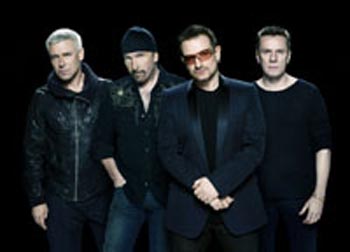
Bono Snorts Salt To Hit High Notes

Bono regularly sniffs salty water as it acts as an antiseptic for his throat and helps ensure he can hit high notes, according to The Script frontman Danny O’Donoghue.

Danny told Britain’s Daily Mirror newspaper: “Snorting salts - it’s actually a singing technique.”

“Myself and Bono share a vocal coach. Whenever the high notes aren’t feeling that high or in the morning you’re groggy, you snort salt water up your nose.”

“It cleans out cavities, it’s a natural antiseptic for your throat.”

 We did not know that

One Series

This week our four part series will be focusing on “One” is a song by Irish rock band U2 and the third track from their 1991 album, Achtung Baby.

It was released as the album’s third single in March 1992. While recording Achtung Baby, conflict arose between band members over the direction of the U2’s sound. Tensions almost prompted the band to break up, until they rallied around the improvised writing of “One” Lyrically, the song describes lead singer Bono’s struggles to maintain relationships with others, but it has been interpreted in other ways.

The song reached #7 in the UK charts and #10 in the US pop chart, and reached the top of the US Billboard Album Rock Tracks and Modern Rock Tracks charts. It peaked at #10 on the Dutch Top 40.

The song is widely considered to be one of the band’s greatest songs and is consistently featured in lists of the greatest songs of all-time. Rolling Stone ranked the song #36 on their list of “The 500 Greatest Songs of All Time”, and Q ranked the song at #1 on its list of the “1001 Greatest Songs of All-Time”.The song has been played by U2 at every one of their concerts since the song’s live debut in 1992, and it has appeared on many of the band’s concert films. In a live setting, “One” is often used by the band to promote human rights or social justice causes, and the song lends its namesake to Bono’s charitable organization, the ONE Campaign. In 2006, U2 re-recorded the song as part of a duet with contemporary R&B singer Mary J. Blige.

At the instant we were recording it, I got a very strong sense of its power. We were all playing together in the big recording room, a huge, eerie ballroom full of ghosts of the war, and everything fell into place. It was a reassuring moment, when everyone finally went, ‘oh great, this album has started.’ It’s the reason you’re in a band - when the spirit descends upon you and you create something truly affecting. ‘One’ is an incredibly moving piece. It hits straight into the heart.

The Edge, on the recording of “One

This is a a very touching story of music, family, friends. We are one share your life and enjoy the story over the next three days. Tomorrow, we cover the video part of the story and can you tell us which Ameircan bank has made a name for its self with the song “One”?

U2 takes risks to make Fire

The boys from U2 have been marking the 25th anniversary of the release of “The Unforgettable Fire” with a series of re-issues of the album. There’s a new remastered version, a vinyl version, a “Deluxe Edition” and even a “Super Deluxe Edition” for $54.99 on Amazon with two CDs, a DVD and a bunch of other extras.

Speakeasy is hoping that they come out with a “Super Mega Magnanimous Deluxe Edition 2.0″ with plane tickets to Dublin, a pub crawl with Bono and guitar lessons from The Edge. We can only hope.

“The Unforgettable Fire” is an album worth celebrating. U2 fans and critics can debate which album is the group’s best–”War,” “The Joshua Tree,” maybe “Achtung Baby.” But “The Unforgettable Fire” deserves to be part of the conversation.

Released in October 1984, and recorded at Slane Castle in Ireland, the release was the first U2 album to be produced by Brian Eno and Daniel Lanois and it took U2 in a more experimental direction. When you see the 1984 video  “Do They Know It’s Christmas?” and see all these largely-forgotten European pop-rockers with questionable haircuts, one reason why U2 transcended all that is that they took an artistic leap like “The Unforgettable Fire.” U2 didn’t just take risks with their hair–they took chances with their music.

“Unforgettable” songs like “A Sort of Homecoming” combined poetic lyrics with nakedly emotional performances, pulling the listener in and keeping them there as they tried to figure out what it all meant. Other songs gave up their meanings more readily: “Pride (In the Name of Love)” eulogized Martin Luther King, Jr.–a challenging subject for a rock song. The track “Bad,” also off the album, explored heroin addiction in terms that were both evocative and abstract.

U2 provided Speakeasy with an exclusive clip of the band talking about the making of ”The Unforgettable Fire.” You can watch it below. Feel free to sound off on what you think is the best U2 album in the comments section.

U2 Fan Book Selections

The question has been asked many times. Is it possible to be a committed Christian and rock superstar, can political activists make good music? How much does a hugely successful rock band really care about AIDS and poverty in Africa or is the whole concept just a front for selling more music. U2 has had a successful career distinctly dipping into those issues while remaining true to its fans.   For over two decades, U2 has been one of the biggest acts in rock music. They’ve produced over a dozen platinum and multiplatinum records and won 15 Grammy Awards. Critics everywhere have praised the band’s thoughtful, complex lyrics and the artistry of their music. At the same time, Bono, the group’s lead singer, has dedicated himself to political and social causes, blurring the line between rock star and respected statesman.

U2TOURFANS 2009We have just completed our book store list of the must read books about U2. The books have been selected to give a new fan some prospective into U2, covering all the topics.  If you’re looking for a holiday gift or just something refreshing to read while you wait out the next show. We invite you to visit our book store. Your purchases are safe and secure, you may ask why buy from our site; why not go directly to AMAZON or any of the other thousands of book stores on-line. We do earn commissions of the sale of the item. By the way if you click a link and purchase anything from AMAZON, you’re supporting our website. So this holiday season why not purchase items from our store. Watch for our guest writers to be coming soon.  

U2 Presale Access Deadlines

Editor Comment: Oh my  if your born on Sunday under the moon but not on the third Sunday after a rain storm your first, if not your second, or third. Bottom line pay attention to your access codes so that your not disappointed.

There are four groups of subscribers taking part in the presale and the email you receive with your presale code indicates which group you are in. Our ‘Horizon’ group of longtime subscribers have access from the first morning of the presale. Our ‘Breathe’ group, who became paid subscribers before the 360° Tour details were announced on March 9th 2009, enter on the afternoon of the first day. Our ‘Boots’ group, who subscribed before the end of the 2009 presale (April 16, 2009), join the presale on the morning of the second day and our ‘Magnificent’ subscribers, who have joined since the end of the 2009 presale (April 16), can enter the presale on the afternoon of Day 2. Only after Day 3 does a public onsale begin. Please Note: We do not change your subscription category. No exceptions will be made. The exact times for access will be emailed to you and made available on the tour page of U2.com when you sign in.

HORIZON GROUP
Anaheim (7 June 2010) Tues. 10 Nov. 10AM local*
Seattle (20 June 2010) Tues. 10 Nov. 10AM local
Philadelphia (12 July 2010) Tues. 10 Nov. 10AM local


BREATHE GROUP
Anaheim (7 June 2010)Tues. 10 Nov. 3PM EST/2PM CST/1PM MST/12PM PST*
Seattle (20 June 2010) Tues. 10 Nov. 3PM EST/2PM CST/1PM MST/12PM PST
Philadelphia (12 July 2010) Tues. 10 Nov. 3PM EST/2PM CST/1PM MST/12PM PST


BOOTS GROUP
Anaheim (7 June 2010)Wed. 11 Nov. 10AM EST/9AM CST/8AM MST/7AM PST*
Seattle (20 June 2010) Wed. 11 Nov. 10AM EST/9AM CST/8AM MST/7AM PST
Philadelphia (12 July 2010) Wed. 11 Nov. 10AM EST/9AM CST/8AM MST/7AM PST


MAGNIFICENT GROUP
Anaheim (7 June 2010)Wed. 11 Nov. 3PM EST/2PM CST/1PM MST/12PM PST*
Seattle (20 June 2010) Wed. 11 Nov. 3PM EST/2PM CST/1PM MST/12PM PST
Philadelphia (12 July 2010) Wed. 11 Nov. 3PM EST/2PM CST/1PM MST/12PM PST


* Note - links to the ticket site will be available on U2.com by Monday evening.

This weeks’ presales will end on Thursday, 12th November at 5PM local.

For these North American shows subscribers can use their code (against FOUR TICKETS IN TOTAL) over four different shows - for example, one ticket in Seattle and three in Philadelphia. . Or even one each in four of these five shows.

Please remember that the U2.com ticket presale offers you early access to the ticket sale and is only open to eligible, current paid-up subscribers of U2.com . Anyone found to be abusing their presale privileges may have their subscription and tickets cancelled.

Sunday Bloody Sunday Part III

“Sunday Bloody Sunday” found itself placed in the middle of a political trio of songs on the Vertigo Tour.  All three songs, but mostly “Sunday Bloody Sunday”, centered on the theme of coexisting. The song was played immediately after “Love and Peace or Else” and segued into “Bullet the Blue Sky.” As it started, the word “coexist” was displayed on the video curtain with the Islamic crescent, the Star of David, and a Christian cross making up letters in the word. After Edge’s solo, Bono would usually drive the point home by saying, “Jesus, Jew, Mohammed, it’s true. All sons of Abraham.” This version of the song focused on the growing religious conflict around the world and was a call for all faiths to realize that they’re much more similar than they think.

Recently, this past year, “Sunday Bloody Sunday” became re-contextualized yet again as a tribute to the 2009 Iranian election protests. The song was also a focal part of the transition between the two parts of the main set. Bono has mentioned in interview that the first half is a personal journey, up until a techno version of “I’ll Go Crazy If I Don’t Go Crazy Tonight.” The backing beats and looped vocals fade out as “Sunday Bloody Sunday” kicks off the political half of the set. As the band played through the song, Iranian writing and footage from the protest appeared on the screen, tinted in a shade of green.

The live history of “Sunday Bloody Sunday” has shown how versatile it is as a song. A track originally written as a call for peace in Ireland has spread throughout the years to a call to the end of all conflicts. Its message is backed by the power of the lyrics and music that it contains. It’s a number that fans love to hear played live. However, every time they do, there’s one line that comes through over and over. “How long must we sing this song?”

Did not catch the whole story ? Check out each part via the links below

Part I

Part II

If you have an idea for a story let us know.

Sunday Bloody Sunday, Part II

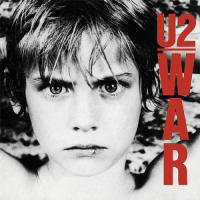
U2TOURFANS/WAR inside cover U2 continued to perform “Sunday Bloody Sunday” as a staple of their live set. As their popularity increased, the band chose it as the opening number of their two-song set for Live Aid. With U2 flags sticking out of the crowd everywhere, the band played a passionate performance during which Bono had the entire Wembley Stadium singing the words “No more!” along with him.

The song reached its live peak during the Joshua Tree Tour. On November 8, 1987, a bomb placed by the Provisional Irish Republican Army exploded during a Remembrance Sunday commemoration in Enniskillen for those killed in all conflicts involving the British Army. The bombing killed 11 people and became the latest stage of the Irish conflict. Later that same day, U2 performed one of the angriest and most passionate versions of “Sunday Bloody Sunday” in their career. It started off with just Edge and Bono before the rest of the band kicked in halfway through. After Edge’s solo, Bono unleashed one of his most scathing rants against the violence occurring in his home country.

After the tour ended, Bono mentioned at one point that the band may never play the song again, since it became real on that day that the performance would never be bested. For the next few years, U2 kept to their word. “Sunday Bloody Sunday” wasn’t played on any of the dates for the 1989 Lovetown Tour. It made a few appearances during the band’s 1992-1993 ZooTV extravaganza, but it was mostly left out of the set.

The song only really returned midway through the band’s 1997-98 Popmart tour. The tour was the most extensive U2 had done up to that point, with dates in South America, Japan, and South Africa. One of the most special dates of the tour occurred when the band visited the war-torn city of Sarajevo. During ZooTV, Sarajevo was under siege by the Serbian Army looking to add the city to a new Serbian state. The conflict lasted for about four years, leading to thousand of deaths and injuries. U2 was closely involved with trying to get help to the citizens of the city and wanted to play there during the conflict. It was deemed too dangerous, though, so the band waited until their next tour to play Sarajevo. It was during this show that “Sunday Bloody Sunday” made its return, albeit in a very different structure. The Edge performed a slow solo version of the song that emphasized the sadness over the violence rather than the anger. It was this version of the song that Edge continued to play for all the remaining dates of the tour, dedicating it to Sarajevo every time.

During U2’s successful Elevation Tour, the “…Sunday” returned in its full band version. This time around, the song was centered on Ireland again. While the Troubles in Ireland had been resolved by 2001, U2 played the song in tribute to those who died in the Omagh bombing of 1998. The bombing killed 29 people in Northern Ireland and was carried out by the Real Irish Republican Army, a splinter group of the IRA. The attack was seen as a response to the nearly completed peace process occurring in the nation.  During performances, Bono would ask for the crowd to “Turn this song into a prayer.” During their emotional concerts at Slane Castle, Bono recited off the names of all the victims of the bombing in tribute to the lives lost. After 9/11, the song was played in tribute to those who died in the terrorist attacks. Instead of talking during the middle break, Bono instead hugged an American flag.

 Catch the whole series here. Part I currently available and Part III due to be posted on Wedneday.