U2's most successful North America Tour

U2 had the most successful North American tour of 2009, according to music trade publication Pollstar.

The Irish band’s 360° stadium tour sold 1.3 million tickets in the US and Canada, worth $123m (£76.3m) overall.

Bruce Springsteen and the E Street Band came second, with tour takings amounting to $94.5m (£58.6m).

U2’s tour is the fifth most successful ever held in North America. The Rolling Stones hold the record, for a 2005 tour that made $162m (£100.5m).

Pollstar’s annual list is based on data provided by concert promoters and venue managers.

U2 may have suffered disappointing sales for their new album, but the Irish rockers were easily the most popular draw on the North American concert circuit this year, according to data issued on Wednesday.

The band sold $123 million worth of tickets to its stadium tour, while Bruce Springsteen and the E Street Band came in second with $94.5 million, said trade publication Pollstar.

Among all-time tours, the U2 trek ranks at No. 5, Pollstar said. The Rolling Stones hold the record with $162 million from their 2005 outing. U2’s 2005 tour is No. 3 on the all-time list with $138.9 million.

Pollstar editor Gary Bongiovanni said the overall concert business bucked the recession, mirroring a similar phenomenon at movie theaters. He said most people go to only one or two shows a year, and are willing to pay a premium for good seats.

U2 hit the road to promote its latest album, “No Line on the Horizon,” which failed to generate any hit singles and sold a relatively modest 1.06 million copies in the United States, according to Nielsen SoundScan.

Pollstar said the band played to 1.3 million people at 20 shows on the North American leg of its world tour, and charged an average of $93.77. The average price on the band’s 2003 tour, when it played 78 shows, was actually higher at $97.

Giant stage

U2 played 20 shows on the North American leg of their 2009 world tour, charging an average of $93.77 (£58) per ticket.

The tour featured a giant claw-like stage that offered largely unobstructed views of the veteran foursome.


Bono Grace over Karma

There have been a number of books written about U2 and their iconic frontman, Bono, arguably the world’s most famous rock star. Bono himself come out to tell his own story. The whole book can be found here.

Bono: In Conversation with Michka Assayas
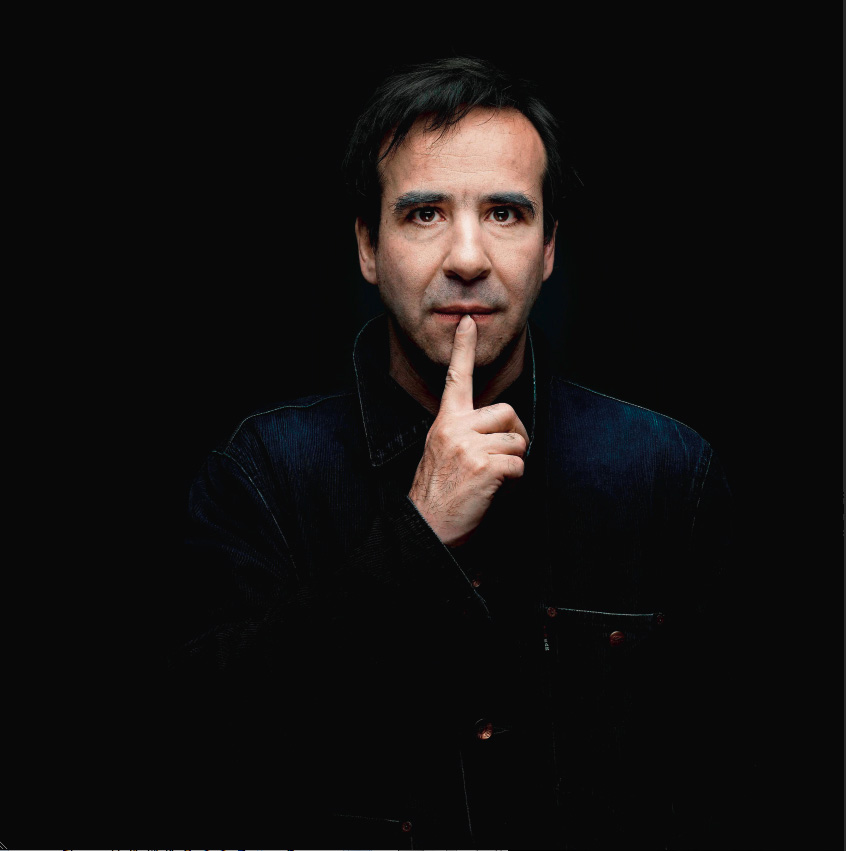
In Conversation with Michka Assayas (Riverhead Books), the rocker shares his thoughts on numerous topics with a French music journalist and friend who has been with the band virtually since the beginning.

In a series of honest conversations presented in Q&A format, Bono discusses, among other things, his upbringing (including the death of his mother when he was a teen and the ensuing rocky relationship with his father. U2’s beginnings, his bandmates, his marriage, fatherhood, his passion for social action, the effects of celebrity, and, fittingly, his faith and how it intersects all of the above.

The following exchange between Bono and Assayas took place just days after the Madrid train bombings in March 2004, an act of terrorism that left 191 dead and more than 1,800 wounded.

The two men were discussing how terrorism is often carried out in the name of religion when Bono turned the conversation to Christianity, expressing his preference for God’s grace over “karma,” offering an articulate apologetic for the deity of Christ, and giving a clear presentation of the gospel message.

Bono: My understanding of the Scriptures has been made simple by the person of Christ. Christ teaches that God is love. What does that mean? What it means for me: a study of the life of Christ. Love here describes itself as a child born in straw poverty, the most vulnerable situation of all, without honor. I don’t let my religious world get too complicated. I just kind of go: Well, I think I know what God is. God is love, and as much as I respond [sighs] in allowing myself to be transformed by that love and acting in that love, that’s my religion. Where things get complicated for me, is when I try to live this love. Now that’s not so easy.

Assayas: What about the God of the Old Testament? He wasn’t so “peace and love”?
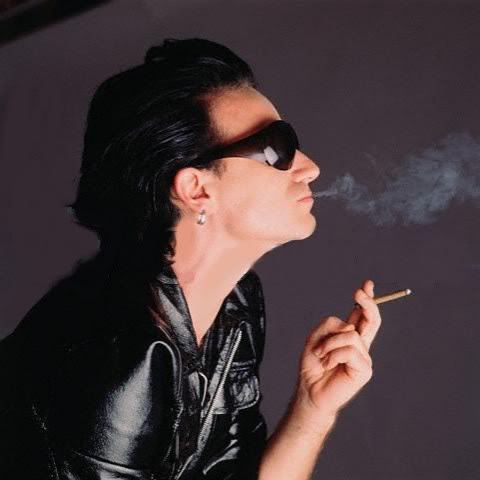
Bono: There’s nothing hippie about my picture of Christ. The Gospels paint a picture of a very demanding, sometimes divisive love, but love it is. I accept the Old Testament as more of an action movie: blood, car chases, evacuations, a lot of special effects, seas dividing, mass murder, adultery. The children of God are running amok, wayward.

Maybe that’s why they’re so relatable. But the way we would see it, those of us who are trying to figure out our Christian conundrum, is that the God of the Old Testament is like the journey from stern father to friend.

When you’re a child, you need clear directions and some strict rules. But with Christ, we have access in a one-to-one relationship, for, as in the Old Testament, it was more one of worship and awe, a vertical relationship. The New Testament, on the other hand, we look across at a Jesus who looks familiar, horizontal. The combination is what makes the Cross.

Assayas: Speaking of bloody action movies, we were talking about South and Central America last time. The Jesuit priests arrived there with the gospel in one hand and a rifle in the other.

Bono: I know, I know. Religion can be the enemy of God. It’s often what happens when God, like Elvis, has left the building. [laughs] A list of instructions where there was once conviction; dogma where once people just did it; a congregation led by a man where once they were led by the Holy Spirit. Discipline replacing discipleship. Why are you chuckling?

Assayas: I was wondering if you said all of that to the Pope the day you met him.

Bono: Let’s not get too hard on the Holy Roman Church here. The Church has its problems, but the older I get, the more comfort I find there. The physical experience of being in a crowd of largely humble people, heads bowed, murmuring prayers, stories told in stained-glass windows …

Assayas: So you won’t be critical.

Bono: No, I can be critical, especially on the topic of contraception. But when I meet someone like Sister Benedicta and see her work with AIDS orphans in Addis Ababa, or Sister Ann doing the same in Malawi, or Father Jack Fenukan and his group Concern all over Africa, when I meet priests and nuns tending to the sick and the poor and giving up much easier lives to do so, I surrender a little easier.

Assayas: But you met the man himself. Was it a great experience?
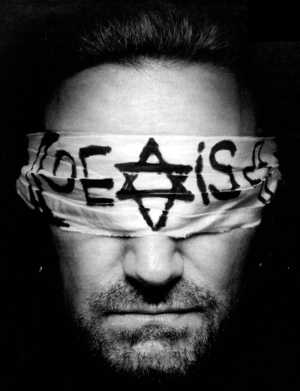
Bono: We all knew why we were there. The Pontiff was about to make an important statement about the inhumanity and injustice of poor countries spending so much of their national income paying back old loans to rich countries. Serious business. He was fighting hard against his Parkinson’s. It was clearly an act of will for him to be there.

I was oddly moved; by his humility, and then by the incredible speech he made, even if it was in whispers. During the preamble, he seemed to be staring at me. I wondered. Was it the fact that I was wearing my blue fly-shades?

So I took them off in case I was causing some offense. When I was introduced to him, he was still staring at them. He kept looking at them in my hand, so I offered them to him as a gift in return for the rosary he had just given me.

Assayas: Didn’t he put them on?

Bono: Not only did he put them on, he smiled the wickedest grin you could ever imagine. He was a comedian. His sense of humor was completely intact. Flashbulbs popped, and I thought: “Wow! The Drop the Debt campaign will have the Pope in my glasses on the front page of every newspaper.”

Assayas: I don’t remember seeing that photograph anywhere, though.

Bono: Nor did we. It seems his courtiers did not have the same sense of humor. Fair enough. I guess they could see the T-shirts.

Assayas: I think I am beginning to understand religion because I have started acting and thinking like a father. What do you make of that?

Bono: Yes, I think that’s normal. It’s a mind-blowing concept that the God who created the universe might be looking for company, a real relationship with people, but the thing that keeps me on my knees is the difference between Grace and Karma.

Assayas: I haven’t heard you talk about that.

Bono I really believe we’ve moved out of the realm of Karma into one of Grace.

Assayas: Well, that doesn’t make it clearer for me.

Bono You see, at the center of all religions is the idea of Karma. You know, what you put out comes back to you: an eye for an eye, a tooth for a tooth, or in physics & mdash;in physical laws—every action is met by an equal or an opposite one. It’s clear to me that Karma is at the very heart of the universe.

I’m absolutely sure of it. And yet, along comes this idea called Grace to upend all that “as you reap, so you will sow” stuff. Grace defies reason and logic. Love interrupts, if you like, the consequences of your actions, which in my case is very good news indeed, because I’ve done a lot of stupid stuff.

Assayas: I’d be interested to hear that.

Bono That’s between me and God. But I’d be in big trouble if Karma was going to finally be my judge. I’d be in deep s—-. It doesn’t excuse my mistakes, but I’m holding out for Grace. I’m holding out that Jesus took my sins onto the Cross, because I know who I am, and I hope I don’t have to depend on my own religiosity.

Assayas: The Son of God who takes away the sins of the world. I wish I could believe in that.

Bono But I love the idea of the Sacrificial Lamb. I love the idea that God says: Look, you cretins, there are certain results to the way we are, to selfishness, and there’s a mortality as part of your very sinful nature, and, let’s face it, you’re not living a very good life, are you? There are consequences to actions.

The point of the death of Christ is that Christ took on the sins of the world, so that what we put out did not come back to us, and that our sinful nature does not reap the obvious death. That’s the point. It should keep us humbled. It’s not our own good works that get us through the gates of heaven.

Assayas: That’s a great idea, no denying it. Such great hope is wonderful, even though it’s close to lunacy, in my view. Christ has his rank among the world’s great thinkers. But Son of God, isn’t that farfetched?
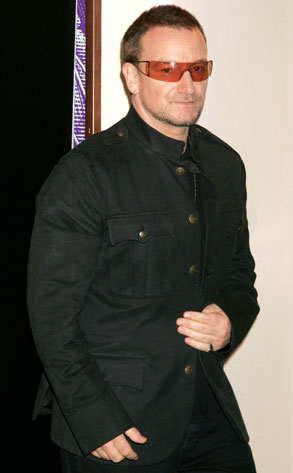
Bono No, it’s not farfetched to me. Look, the secular response to the Christ story always goes like this: he was a great prophet, obviously a very interesting guy, had a lot to say along the lines of other great prophets, be they Elijah, Muhammad, Buddha, or Confucius.

But actually Christ doesn’t allow you that. He doesn’t let you off that hook. Christ says: No. I’m not saying I’m a teacher, don’t call me teacher. I’m not saying I’m a prophet. I’m saying: “I’m the Messiah.” I’m saying: “I am God incarnate.” And people say: No, no, please, just be a prophet. A prophet, we can take. You’re a bit eccentric. We’ve had John the Baptist eating locusts and wild honey, we can handle that. But don’t mention the “M” word! Because, you know, we’re gonna have to crucify you. And he goes: No, no.

I know you’re expecting me to come back with an army, and set you free from these creeps, but actually I am the Messiah. At this point, everyone starts staring at their shoes, and says: Oh, my God, he’s gonna keep saying this. So what you’re left with is: either Christ was who He said He was the Messiah or a complete nutcase. I mean, we’re talking nutcase on the level of Charles Manson.

This man was like some of the people we’ve been talking about earlier. This man was strapping himself to a bomb, and had “King of the Jews” on his head, and, as they were putting him up on the Cross, was going: OK, martyrdom, here we go. Bring on the pain! I can take it. I’m not joking here. The idea that the entire course of civilization for over half of the globe could have its fate changed and turned upside-down by a nutcase, for me, that’s farfetched; Bono later says it all comes down to how we regard Jesus:

Bono: If only we could be a bit more like Him, the world would be transformed. When I look at the Cross of Christ, what I see up there is all my s—- and everybody else’s. So I ask myself a question a lot of people have asked: Who is this man? And was He who He said He was, or was He just a religious nut? And there it is, and that’s the question. And no one can talk you into it or out of it.

'Killing Bono' shooting to begin

Dave Long 2009Plenty of schoolchildren dream of becoming famous singers, but when a boy on the other side of the classroom goes on to become one of the most famous rock stars in the world, you could end up feeling a little overshadowed.

That is exactly what happened to Neil McCormick, who went to school with a boy called Paul Hewson - better known these days as U2’s Bono.

So could it be jealously then that inspired the title of the new movie ‘Killing Bono’, which is based on Mr McCormick’s memoirs?

Filming of the story, which is set around U2’s formative years in a north Dublin comprehensive school, is set to begin in Northern Ireland early next year.

It tells the story from the point of view of the rather less successful rival band which Mr McCormick and his brother set up in the late 1970s.

‘Music-based comedy’

The film, which is funded by Northern Ireland Screen with help from Invest NI, will be directed by Nick Hamm.

It is not the first time that the Belfast-born director has brought inspiration from his native city to the screen - his 2001 thriller ‘The Hole’, starring Keira Knightley, was heavily influenced by his time as a student at Belfast’s Campbell College.

“Killing Bono” which has been described as an “Irish music-based comedy” will feature music from Castledawson singer/songwriter Joe Echo.

Neil McCormick, who now works as a music critic for the Daily Telegraph, published his autobiography, ‘I Was Bono’s Doppelganger’ in 2004, which included a foreword by the singer.

He said he was delighted that the film was being supported by Northern Ireland Screen and hoped that the film would be released in the summer of 2010.

New U2 Album June 2010

U2 make fans’ Christmas as they reveal plans for their next album

The biggest band in the world is planning a release by June before taking to the road on tour, writes Niamh Horan

IRISH rockers U2 have delivered a late Christmas present to their loyal fans this weekend by promising to release a new album by June.

Speaking exclusively to the Sunday Independent at Leopardstown Races yesterday, U2 frontman Bono revealed the band had been working hard on new material in the run-up to Christmas and are hoping to have a new chart-topping album on shelves before the summer.

Speaking about the upcoming release, Bono described how the band had been putting in the hard work in the studio in recent weeks: “We are working away and we have a couple of yearlings in the stables that could really turn out to be thoroughbreds in the future,” he said.

“As a band you are always trying to work on new material and we had some unfinished material from the last album.

“I would love to elaborate a bit more but unfortunately it is a democracy — and sure isn’t that the world that we live in?”

One person who had no problem elaborating, however, was U2 manager Paul McGuinness.

The legendary music mogul described how the world’s biggest rock group are confident of having the album released by June.

“I have heard some of the stuff the guys have played and, yeah, it is great. Bono is always an optimist but he seems confident of getting a new record out by the end of the next six months. They’re talking about June. By that time we will be ready to go back on tour and I think that will give it a different flavour.”

Mr McGuinness also described how sales of concert tickets “have been incredible” for the band — despite the current recession.

“Most of the shows left are either sold out or close to being sold out, which is terrific. We’re defying gravity at this stage — it’s incredible.”

He also took some time out to offer his support to bassist Adam Clayton following reports last week that he is involved in a court case with his former housekeeper who has allegedly misappropriated €1.8m.

“It is very upsetting for him, especially because it is someone that he trusted and let into his life and his home. I didn’t council him or advise him or anything like that.

“For Adam to discover that someone he had trusted had let him down like that… well, it is disappointing.

“I suppose though that is life and it could happen to anyone. But I can’t really say too much about it because of the legality of it but that the courts are dealing with it.”

Meanwhile, speaking about his time off over Christmas, Bono said: “We have had a really great Christmas, very homely and lovely and we had a great time. In fact, we have just had the most amazing year.”

The Irish rocker was continuing what has become an annual tradition for him an his pals, by spending St Stephen’s Day at Leopardstown races with his wife Ali.

“I did have one bet today but it was more of a sentimental flutter for the year that is ahead of U2.

“I put some money on a horse called Happy Reunion but unfortunately it was no good so I can only hope that we will have a bit more success.”

Dusting ‘Em Off: U2 - Three

This is where it all began. 30 years ago this past September, four Irish teenagers — Bono Vox, The Edge, Adam Clayton, and Larry Mullen, Jr. — recorded three songs in Windmill Lane Studios for their first official release. Titled Three and sold exclusively in Ireland under CBS Records, the EP represented the first step on the path of success for U2.

By this point, U2 had already been together for three years and were steadily building a reputation in Ireland. It seemed like they were set to take off when the band won a talent contest in 1978 that offered a prize of studio time to record a demo. Unfortunately, when the session began, no one in the band knew what the hell they were doing. Edge put his guitar at an incredibly low volume, Bono had adopted an awful English accent, and a young Larry Mullen, Jr. was pulled out of the studio by his father because he had exams the next day.

While it was a squandered opportunity, U2 luckily got another chance a year later. This time around, they were a little more prepared. During the interim year, the group landed Paul McGuinness as their manager, gained support from Hot Press Magazine, and opened for punk rockers The Stranglers. They caught the attention of an A & R scout from CBS London named Chas De Whalley, who came in with demo money and produced the EP despite a lack of experience. Although the band still wasn’t playing very well, the songs they wrote were strong enough to support their weaknesses.

“Out of Control” was chosen as the A-side for the EP by listeners on the Dave Fanning Rock Show on RTE station. Almost as soon as the track starts, it has “U2 anthem” written all over it. By this point, Edge had gotten his Memory Man Echo Unit and had started to develop his trademark sound. In this case, it really makes the song since the rest of the band were still finding their feet. Mullen, Jr, had trouble playing in time, Clayton’s bass was extremely simple, and Bono… well, let’s just say his singing voice wasn’t all that yet. But the song has a real kick to it and a boundless amount of energy that feels contagious. Bono’s lyrical exploration was already moving in an introspective direction. Written on his 18th birthday, he said the song was about hitting that age and “realizing… the two most important decisions in your life have nothing to do with you — being born and dying.”

“Stories for Boys” has more of a groove to it than the A-side. Containing a fully expressed sense of excitement, the song deals with escapism from the everyday. While not fully developed, it technically shows more promise than either of the other two songs. Whereas “Out of Control” feels mostly like Edge was in charge, “Stories for Boys” is the sound of the band clicking and playing as a cohesive unit. “Boy-Girl” is the least memorable track on the EP. Dealing with the relationship between (no surprise here) a boy and a girl who are maturing into adults, the song is more like a rough sketch than a fully thought out track. The lyrics don’t go anywhere and the instrumentation is just average at best. It’s not shocking that when U2 were re-recording songs for their first album, Boy, it was the only one out of the three to not make the cut.

Limited to 1,000 copies for Ireland, the EP made a surprising splash in the Irish Singles Charts, peaking at number 19. Sadly, CBS UK passed on U2, only offering a record deal if they fired Larry Mullen, Jr. The drummer was still having trouble playing in time but the rest of the band stuck by him. The EP did help them increase their fanbase in their home country even more and was followed by a tour in England. The resulting success of that tour led to a deal with Island Records. The rest is history.

Even though the music isn’t really there, the potential of U2 can be heard in all three songs. Well… okay, not “”Boy-Girl”. But “Out of Control” and “Stories for Boys” would go on to be very good album cuts for their debut in 1980. “Out of Control” has been an occasional part of the band’s set list, all the way up to this decade. The sound made on Three isn’t that of one of the world’s biggest bands. It’s the sound of a group that had endless enthusiasm for their music and knew success was within reach.

U2 Songs That Celebrate the Season

U2 is made up of a batch of Catholic Irishmen, which means that the rock band can somewhat be considered a Christian band and ATU2 compiled a list of the “Top 6 U2 Christmas References” leading up to the holiday … although don’t expect “We Wish You a Merry Christmas” from Bono & Co! At No. 6 is U2’s (never officially released) cover of John Lennon’s classic song “Happy Xmas (War is Over).” U2 once performed the song on the Irish Late Late Show.

“If God Will Send His Angles” comes in at No. 5, with the line, “And the love? What’s that you say to me? Does love light up your Christmas tree?”

In reviewing the song ATU2 says the song is “as delicate and beautiful as anything they’ve ever done. The whole song has a cold, shimmering feel to it, like a Christmas night where the narrator is outside of the house in the snow, looking through the window at the warmth on the other side.”

“Jesus, sing a song you wrote. The words are sticking in my throat. Peace on Earth. We hear it every Christmas time, but hope and history won’t rhyme so what’s it worth. This peace on earth,” are the words to “Peace on Earth,” in which Bono lists people that died in the Omagh bombing and asks why. No. 3, “Miss Sarajevo” is similar to the past two songs, with the lyrics, “Is there a time for typing ribbons, a time for Christmas trees? Is there a time for setting tables and the night is set to freeze?” No. 2 is”Christmas (Baby, Please Come Home).”  U2’s cover of Greg Lake’s “I Believe in Father Christmas” ranked at No.1 for being “the best cover song U2 has ever done”

Dave's Fab 50

Legendary DJ Dave Fanning gave U2 an early Christmas present after naming them as having the best single of all time.

The fast-talking presenter has revealed how their world-renowned track One emerged victorious after a long-running poll among his listeners to find their favourite hit.

In Fanning’s Fab 50, the foursome managed to beat off competition from some strong contenders to come out on top.

Other anthems in the final included Kings of Leon’s Sex On Fire, Led Zeppelin’s Stairway To Heaven and The Killers’ hit Mr Brightside.

But our own Dublin lads claimed three of the top ten places with One, Bad and With or Without You.

Now in it’s 29th year, Fanning’s poll has been calling on his listeners to name their favourite all-time hits over the past few weeks.

U2 have always dominated Fanning’s Fab 50 with One in particular topping the charts over the past few years, said Dave.

“I’ve seen them been challenged from the likes of Nirvana, Smashing Pumpkins, The Smiths and Radiohead but, regardless, U2 are always there or thereabouts. Every year, the top ten has featured numerous U2 tracks and yet again it’s great to see that their following in Ireland is as strong as ever.”