U2 Tour Should Gross $750 Million

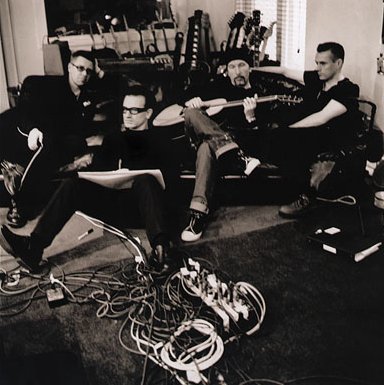
Bono / Paul The U2 tour will probably gross $750 million by the time it finishes in 2010, according to band manager Paul McGuinness.

He told the Financial Times that the 44 sold-out dates since June, which saw the band play in front of 3.2 million people, grossed about $320 million.

With a similar number of dates planned for 2010, he calculates the full tour should gross about $750 million including merchandise sales, dwarfing the $389 million the act grossed on the Vertigo tour in 2005 and 2006.

He says using the 360º stage has enabled each venue to increase capacity by one-fifth. Partly because of the custom-built, claw-shaped set, the tour costs are about $750,000 a day, “whether we play or not.”

He says the tour should still be “highly profitable” but very often that gross figure is carelessly written about as having gone “straight into Bono’s pocket.”

McGuinness also told the FT about the importance of attention to detail when auditing the band’s payments from record companies and publishers.

“On not one of those occasions did we fail to uncover an underpayment,” he said.


No Line references to God

Many people have argued that U2 is really a Christian band that has achieved the ultimate crossover success.  Others say they were a Christian band that have fallen away from their faith.  I argue that they are a band that express their whole lives in their music, faith, love, dirt, everything.  It shouldn’t surprise people when someone who has a lot of faith then expresses it in their music. 

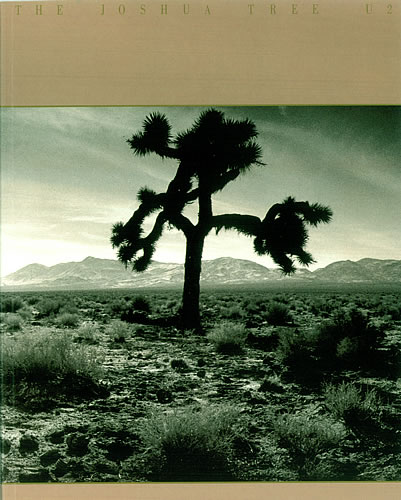
Many people see the Joshua Tree album as the defining moment in the argument, particularly the song I Still Haven’t Found What I’m Looking For. 

Critics point to this song as U2’s declaration of faithlessness (This was a hot topic when I was younger and one of the reasons my mom didn’t want me to listen to U2).  I say it is only a natural response to the difficulties of maintaining faith. 

If you start at the top of a mountain traveling to a village in the valley, as you wind your way down the trail you sometimes reach points you don’t see your destination anymore.  Sometimes during these times it seems hard to travel on but when you see your destination again you receive renewed energy and pick up the pace.  Some think U2 in …Looking For are describing one of those moments you find yourself on a particularly long stretch of road were you can’t see the village below.  The point is, though, you keep walking and you will reach it eventually. The best list of bible references has been maintained Angela Pancella( @U2).We have included some of Angela’s work here. 

“We’ve found different ways of expressing it, and recognized the power of the media to manipulate such signs. Maybe we just have to sort of draw our fish in the sand. It’s there for people who are interested. It shouldn’t be there for people who aren’t.”—Bono on faith, quoted in “U2 at the End of the World”

No Line On The Horizon

“Magnificent”

“It was a joyful noise” — Psalm 100:1: “Make a joyful noise unto the LORD, all ye lands.” (King James; see also Psalm 66:1, Psalm 81:1, Psalm 95:1-2, Psalm 98:4,6)

“Justified till we die” — the concept of being “justified” shows up all over the place, particularly in Paul’s letters, see for instance Romans 8:30: “Moreover whom he did predestinate, them he also called: and whom he called, them he also justified: and whom he justified, them he also glorified.” (King James)

“You and I will magnify” — Luke 1:46-55 is the song of Mary known as the Magnificat for its first line, rendered in King James as “My soul doth magnify the Lord, And my spirit hath rejoiced in God my Saviour.”

“Moment of Surrender”

“It’s not if I believe in love/But if love believes in me” — echoes 1 John 4:10: “This is love: not that we loved God, but that he loved us and sent his Son as an atoning sacrifice for our sins.”

“At the altar of the dark star” — See “Slide Away” (below)

“Unknown Caller”

“3:33 when the numbers fell off the clockface” — see the cover art for All That You Can’t Leave Behind and its reference to Jeremiah 33:3: “Call to me and I will answer you and tell you great and unsearchable things you do not know.” Bono told Rolling Stone, “It’s known as ‘God’s telephone number.’”

“Cease to speak that I may speak” — may reference Psalm 46:10: “Be still, and know that I am God; I will be exalted among the nations, I will be exalted in the earth.”

“I’ll Go Crazy If I Don’t Go Crazy Tonight”

“Is it true that perfect love drives out all fear” — more 1 John 4, this time 18: “There is no fear in love. But perfect love drives out fear, because fear has to do with punishment. The one who fears is not made perfect in love.”

“Stand Up Comedy”

“I can stand up for hope, faith, love” — 1 Corinthians 13:13: “And now these three remain: faith, hope and love. But the greatest of these is love.” (See “Elvis Ate America.”)

“God is love”— 1 John 4:16: “And so we know and rely on the love God has for us. God is love. Whoever lives in love lives in God, and God in him.” (I’m just going to start calling this album 1 John 4 from now on.)

“White As Snow”

“Who can forgive forgiveness where forgiveness is not/Only the lamb as white as snow” — John 1:29: “The next day John saw Jesus coming toward him and said, ‘Look, the Lamb of God, who takes away the sin of the world!’” (Also see Exodus 12 for a description of the sacrificial lamb of Passover being without blemish.)

“Cedars of Lebanon”

Oh gosh, mentions of the cedars of Lebanon are scattered throughout the Bible. See Song of Solomon 5:15: “His legs are pillars of marble set on bases of pure gold. His appearance is like Lebanon, choice as its cedars.”

Go, shout it out, rise up -

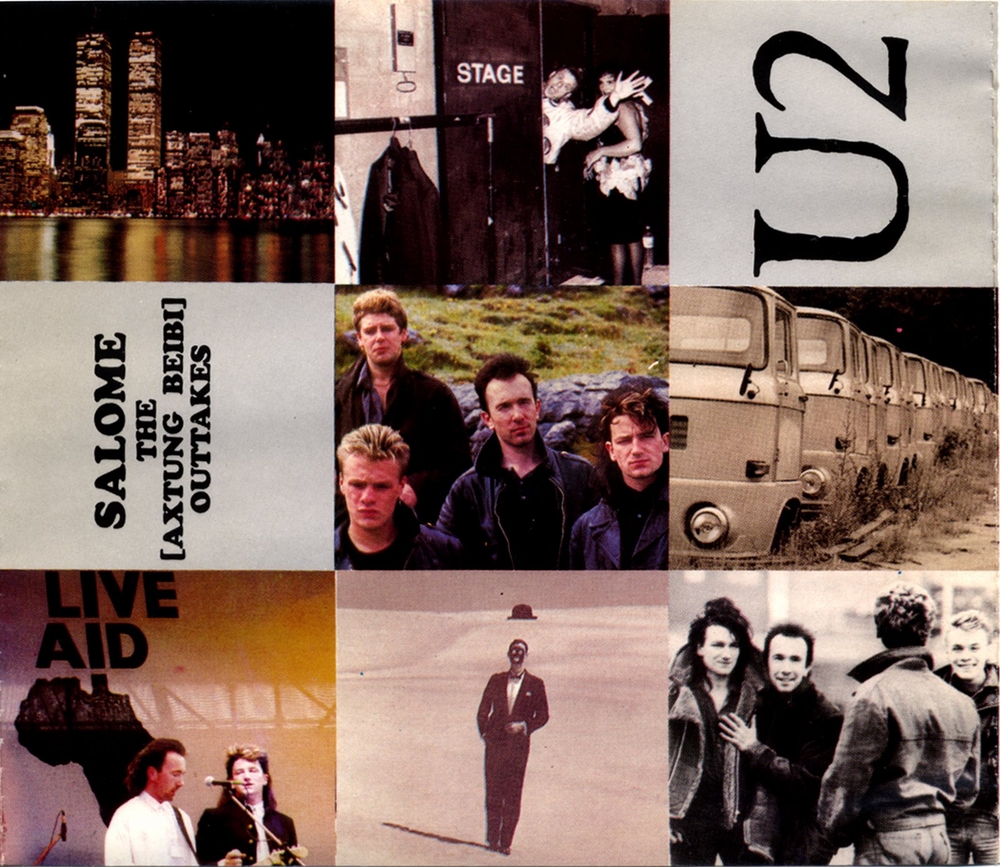
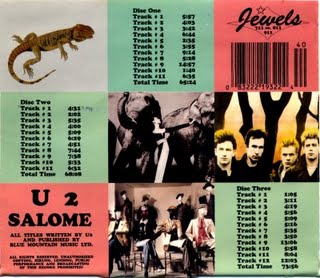
Salome: The [Axtung Beibi] Outtakes

In the winter of 1990, U2 were hard at work in Hansa Ton recording studios in Berlin, Germany. The ultimate result of this effort would be the November 1991 release of their next album, Achtung Baby. However, in December 1990 that album was a great ways off, because U2 (unlike most other bands) entered the studio with very few lyric or song ideas.

Instead, U2 came into the studio to create as well as record. Here they sought inspirations for songs from playing together. They would etch out ideas while improvising around some basic idea, or riff. Since all this jamming was taking place in a recording studio, even the simplest of ideas was captured on tape. The highlights of these tapes were then edited down and compiled into “working tapes” recorded onto DAT (Digital Audio Tape) cassettes. Tapes of this nature were used to hold possible song ideas, as well as a means for Brian Eno (and others) to hear the band’s progress and make suggestions about the music.

In April of 1991, it was announced that the tapes had found their way into the hand’s of bootleggers. Since then, the U2 working tapes have been pressed in a variety of forms:

May 1991: The New U2: Rehearsals and Full Versions
The debut pressing of the sessions. Available on vinyl only, as two separate double album packages. The covers were identical except for the colors of the lettering. One cover featured silver lettering, while the other had gold. In this pressing both LP’s of the silver lettered album proved to be identical. This resulted in four LP’s being released, but with only three LP’s worth of material.

June 1991: The New U2: Rehearsals and Full Versions
It was widely rumored that the set had been pressed again, but this time without any duplication between the LP’s. If true, this meant that there were now four LP’s worth of material available.
 

November 1991: The New U2: Rehearsals and Full Versions. This time the pressings were released as a boxed set of 5 LP’s. Surprisingly, there was no duplication within the set. All of these LP’s were pressed on translucent vinyl, in either blue or green (pink pressings have also been rumored).

February 1992: Salome: The [Axtung Beibi] Outtakes This was the release that had been deemed “too hot” to ever be pressed. The complete three and half hours worth of material were now available as a triple compact disc set. Since these CD’s were mastered from the original DAT recordings, there’s no quality loss between the original working tapes and these CD’s. Thus the sound quality is far superior to the LP’s. The title (Salome) is believed to have been a working title used during the Achtung Baby sessions, but it’s not clear which song it was refering to. With these releases U2 found themselves in the dubious position of being:

“the first major band to have studio sessions released before the finished product was either released, abandoned or the group broke up”.

U2’s manager Paul McGuiness reacted to the bootlegs by releasing a press statement accusing the bootleggers of cheating the fans by passing off inferior material. He also stated that the finished product had evolved by leaps and bounds from what was being illegally circulated.

Regardless of the superior polish of the finished material released as Achtung Baby, the material found on the bootlegs is fascinating in and of itself. The most compelling aspect of the bootleged material is that, rather than offering slightly alternative versions of tracks found on the finished record, they instead reveal the songwriting process itself. Familiar solos, bass lines, bridges and riffs abound, and there is also a host of interesting songs that didn’t find their way onto Achtung Baby.


U2
S A L O M E
The [Aktung Beibi] Outtakes
1991/1993

CD 1

01 - Salome #1
02 - Where Did It All Go Wrong #1
03 - Where Did It All Go Wrong #2
04 - Heaven And Hell
05 - Doctor Doctor
06 - Jitterbug Baby
07 - Got To Get Together
08 - Salome #2
09 - Here Comes The Sunset
10 - Chances Away
11 - Chances Away (Short)
12 - I Feel Free #1


CD 2

01 - I Feel Free #2
02 - Sweet Baby Jane
03 - Who’s Gonna Ride Your Wild Horses #1
04 - Who’s Gonna Ride Your Wild Horses #2
05 - Who’s Gonna Ride Your Wild Horses #3
06 - Take Today (Instrumental)
07 - Even Better Than The Real Thing
08 - Blow Your House Down #1
09 - Blow Your House Down #2
10 - Laughing In The Face Of Love
11 - Wake Up Dead Man
12 - Take Today (Vocal)


CD 3

01 - Calling Out To Someone
02 - Laughing In The Face Of Love #2
03 - Acrobat
04 - Salome #3
05 - Who’s Gonna Ride Your Wild Horses #4
06 - Wake Up Dead Man (Mix)
07 - [Unnamed] (Instrumental)
08 - Salome #4
09 - Salome #5
10 - Salome #6
11 - Salome #7
12 - Salome #8


There were now 5 LP’s worth of material available, which came to a staggering total of 3 hours, 27 minutes, and 28 seconds.

Bono's Dell visit no secret

AP 2009Before Omahans went all-out Twitter and text crazy, an international rock star might have been able to show up at a local bar — and the masses would read about it later.

As it happened Thursday night, U2’s Bono made a surprise visit to the Dundee Dell.

Within 15 minutes, the place was jammed.

“It’s funny to see how fast the word got out — how social media has changed things,” said manager Monique Huston. Dolled-up smart phone- responding fans, mostly females, rushed to the Dell.

Already at the bar was World-Herald editorial cartoonist Jeff Koterba, who also plays in an Irish band. Not really the starstruck type, Koterba said he even gawked — at first because the guy walking in had on sunglasses at about 9:45 p.m.

“You just don’t expect to look up and see Bono,” Koterba said. “It was bizarre.”

Bono was with an entourage of about 15, including friend Susie Buffett. Buffett serves on the board of DATA (Debt, AIDS, Trade, Africa), a group Bono that helped form in 2002 to raise awareness of poverty and AIDS in Africa.

The humanitarian superstar has dropped by the Dell on previous trips to Omaha, often for breakfast. Huston said she heard he would be in town for more than a day, and she hopes he stops in again.

On Thursday, he stayed for 1½ hours.

He signed autographs. He posed for pictures. Some appeared nearly instantaneously on Facebook pages.

I want my MTV, I want U2

The musical era of the 1980s Like many other decades, the 1980s was a decade where music was a way to chronicle the times and events of the era. In some ways, the musical genres during the 1980s redefined the way many bands and artists made new music and it still continues to influence music today. Many of the musicians during the 1980s have maintained staying power and are still popular today. Other artists enjoyed a modicum of success during the decade and they are not even widely recognized today, save for the television programs that strive to reunite the bands and give exposure to artists of the time. Following is some descriptions and explanations of the bands and interests that helped to change the face of music in the 80s.

In August 1, 1981, at 12:01 a.m., MTV: Music Television launched with the words “Ladies and gentlemen, rock and roll,” spoken by John Lack. Those words were immediately followed by the original MTV theme song, a crunching guitar riff written by Jonathan Elias and John Petersen, playing over a montage of the Apollo 11 moon landing. MTV producers Alan Goodman and Fred Seibert used this public domain footage as a conceit, associating MTV with the most famous moment in world television history.Seibert said they had originally planned to use Neil Armstrong’s “One small step” quote, but lawyers said Armstrong owns his name and likeness, and Armstrong had refused, so the quote was replaced with a beeping sound.

 The musical era of the 1980s Like many other decades, the 1980s was a decade where music was a way to chronicle the times and events of the era. In some ways, the musical genres during the 1980s redefined the way many bands and artists made new music and it still continues to influence music today. Many of the musicians during the 1980s have maintained staying power and are still popular today. Other artists enjoyed a modicum of success during the decade and they are not even widely recognized today, save for the television programs that strive to reunite the bands and give exposure to artists of the time. Following is some descriptions and explanations of the bands and interests that helped to change the face of music in the 80s.

In August 1, 1981, at 12:01 a.m., MTV: Music Television launched with the words “Ladies and gentlemen, rock and roll,” spoken by John Lack. Those words were immediately followed by the original MTV theme song, a crunching guitar riff written by Jonathan Elias and John Petersen, playing over a montage of the Apollo 11 moon landing. MTV producers Alan Goodman and Fred Seibert used this public domain footage as a conceit, associating MTV with the most famous moment in world television history.Seibert said they had originally planned to use Neil Armstrong’s “One small step” quote, but lawyers said Armstrong owns his name and likeness, and Armstrong had refused, so the quote was replaced with a beeping sound.

At the moment of its launch, only a few thousand people on a single cable system in northern New Jersey could see it. I remember when MTV appeared on our channels out on Long Island, I was forever locked into the house at night. I was amazed at the videos and of course Martha - She was the girl next door. So cool, so fresh, so not anything you would expect around rock and roll.  MTV filled the house, we had parties watched MTV all the time little did I know at the time what an impact MTV would have on my life. I ended up working for them for 4 years (Spring Breaks Daytona Beach) TC Top Dogs was the food of choice at the time and of course all the beer I could drink. Ok lets get back to the story maybe another day I will share my MTV Crew stories.

Appropriately, the first music video shown on MTV was “Video Killed the Radio Star” by The Buggles. The second video shown was Pat Benatar’s “You Better Run”. Sporadically, the screen would go black when an employee at MTV inserted a tape into a VCR.

As programming chief, Robert W. Pittman recruited and managed a team for the launch that included Tom Freston (who succeeded Pittman as CEO of MTV networks), Fred Seibert, John Sykes, Carolyn Baker (original head of talent and acquisition), Marshall Cohen (original head of research), Gail Sparrow (of talent and acquisition), Sue Steinberg (executive producer), Julian Goldberg, Steve Casey (creator of the name MTV and its first program director), Marcy Brafman, Ronald E. “Buzz” Brindle, and Robert Morton.

A super group by the name of U2 would come to conquer the world with the release of their debut album in the 1980s. U2 hails from Ireland and still enjoys a long and fruitful career. Their debut album, Boy, was released in 1980 with several songs making it on 1980’s greatest hits list. Even more great U2 albums would follow, including War, The Joshua Tree, and Rattle and Hum.

A super group by the name of U2 would come to conquer the world with the release of their debut album in the 1980s. U2 hails from Ireland and still enjoys a long and fruitful career. Their debut album, Boy, was released in 1980 with several songs making it on 1980’s greatest hits list. Even more great U2 albums would follow, including War, The Joshua Tree, and Rattle and Hum.

The music of the 1980’s would end on quite a different note. The music would change from the electronic sounds of groups who were perfectly groomed artists to the loud, aggressive guitar sound of Grunge Rock which was played by musicians who liked to dress down. In 1989, the album Bleach would launch the career of the popular group called Nirvana. Rock n’ Roll would be dominated by Nirvana and their iconic singer Kurt Cobain over the next few years. Nirvana’s super hit, Smells Like Teen Spirit not only is one of the 80’s greatest hits, but is considered by many to be one of rock n’ rolls greatest hits of all time. The greatest hits from the 80’s are certainly a mixture of different styles with music to please everyone.

They began as Irish teenagers with a punkish bent and Christian beliefs. They became all-out rock stars, using their time at that elusive media-darling podium to raise political awareness, fund charities and satirize the big-money factory that rock and roll can feel like on its worst bad-hair days. And when these guys get an itch to try something new, they don’t stop at a new look or a new record producer—they completely re-concoct themselves—they create a whole new mythology. Sure, they dated some supermodels and yes, they even dabbled with the sex symbol spotlight themselves, but they also kicked off one of their tours at K-Mart. They were friends with the likes of Frank Sinatra and Salman Rushdie, but seemed to pal around with some everyday people too. There were songs about violence in Northern Ireland and the assassination of the Reverend Martin Luther King, Jr., but hilariously memorable arena touring and goofball antics too. This is a band that’s both ultra-serious and ultra-self-deprecating, both intimate and don’t-even-think-about-getting-close. Their tiny little band name, it turns out, fronts a lot of churning personality and ideas that are anything but tiny.

Drummer Larry Mullen, Jr., hung a poster up at his high school that advertised a need for band members. Paul Hewson, David Evans, Adam Clayton and Dick Evans responded, and in Mullen’s kitchen, so it began. They covered Rolling Stones and Beatles songs, calling themselves Feedback (which apparently, they had a lot of), then Hype (which they didn’t have a lot of). When Dick Evans left to form the Virgin Prunes, the remaining four—perhaps wanting something subtler—chose the new name U2.

A buddy started calling Hewson “Bono Vox,” after a hearing aid advertisement. The hearing aid stigma wasn’t the most appealing, but the Latin meaning of the phrase—“good voice”—was, so Hewson stuck with Bono. And Bono, in turn, named David “The Edge,” which also stuck. In 1978, the foursome won both a talent show sponsored by Guinness beer and their very own manager, who helped them release an EP that was available only in Ireland. In 1980, they signed with Island Records and released Boy. They went back to the U.K. to tour (and to make sure their posters read “U2” this time, not “V2”) and crossed the Atlantic to the States.

A buddy started calling Hewson “Bono Vox,” after a hearing aid advertisement. The hearing aid stigma wasn’t the most appealing, but the Latin meaning of the phrase—“good voice”—was, so Hewson stuck with Bono. And Bono, in turn, named David “The Edge,” which also stuck. In 1978, the foursome won both a talent show sponsored by Guinness beer and their very own manager, who helped them release an EP that was available only in Ireland. In 1980, they signed with Island Records and released Boy. They went back to the U.K. to tour (and to make sure their posters read “U2” this time, not “V2”) and crossed the Atlantic to the States.

Their second album, October, told of their strong Christian faiths, and though the Polish Solidarity movement-inspired “New Year’s Day” was popular, it wasn’t the hit the band was looking for. That came with 1983’s War. “Sunday Bloody Sunday” was about the tumult in Northern Ireland, and Bono was known to wave a white flag in live shows—early political imagery for a soon-to-be political band. They filmed their concert at Colorado’s Red Rocks Amphitheater, and released the show as an EP called Under a Blood Red Sky.

1984’s Unforgettable Fire gave U2 their first U.S. Top-40 hit with “(Pride) In the Name of Love.” The release of The Joshua Tree in ’87 solidified their rock star status, and from it came the number one hits “I Still Haven’t Found What I’m Looking For” and “With Or Without You.” Firm political stances and themes of spiritual salvation coursed through the record’s veins, but so did a healthy sense of fun. They hung out with the late great Frank Sinatra when their tour passed through Vegas, for instance—the beginning of a ten-year friendship with the permanent Chairman of the Board. The cover of Time magazine followed in its wake (they were only the third bunch of rockers to peer out of that hallowed red frame, by the way… preceded only by The Beatles and The Who). The double record and accompanying concert film Rattle and Hum came soon afterward—a project that clearly spoke to the band’s American blues, soul and country influences

1984’s Unforgettable Fire gave U2 their first U.S. Top-40 hit with “(Pride) In the Name of Love.” The release of The Joshua Tree in ’87 solidified their rock star status, and from it came the number one hits “I Still Haven’t Found What I’m Looking For” and “With Or Without You.” Firm political stances and themes of spiritual salvation coursed through the record’s veins, but so did a healthy sense of fun. They hung out with the late great Frank Sinatra when their tour passed through Vegas, for instance—the beginning of a ten-year friendship with the permanent Chairman of the Board. The cover of Time magazine followed in its wake (they were only the third bunch of rockers to peer out of that hallowed red frame, by the way… preceded only by The Beatles and The Who). The double record and accompanying concert film Rattle and Hum came soon afterward—a project that clearly spoke to the band’s American blues, soul and country influences

With its dance and electronic bent, 1990’s Achtung Baby was one of the band’s much-chronicled re-inventions. Recorded in Berlin, the album contained the beguiling hits “Mysterious Ways” and “One.” The accompanying tour was called “Zoo TV,” and it unleashed playful mass-media gimmickry on its audiences. Bono sang, dressed, spoke and vamped as “The Fly,” an invented, over-the-top alter ego who was meant to poke fun at the idea of inflated rock stardom.

In the middle of the Zoo TV tour, the band stole away to record Zooropa in 1993, to piqued (but favorable) critical eyebrows in 1993. Yet again, the band’s old sound had molted and something new was in its place. On this stadium tour, Edge got behind the mike with his monotone single “Numb,” and Bono’s “Fly” persona was shed, replaced by the wicked and horned “Mister MacPhisto.” MacPhisto was deemed the “Last Rock Star,” and was known to ring up politicians from a cell phone onstage and harangue his callers, much to the delight of himself and his crowd.

In the middle of the Zoo TV tour, the band stole away to record Zooropa in 1993, to piqued (but favorable) critical eyebrows in 1993. Yet again, the band’s old sound had molted and something new was in its place. On this stadium tour, Edge got behind the mike with his monotone single “Numb,” and Bono’s “Fly” persona was shed, replaced by the wicked and horned “Mister MacPhisto.” MacPhisto was deemed the “Last Rock Star,” and was known to ring up politicians from a cell phone onstage and harangue his callers, much to the delight of himself and his crowd.

The business of arena rock, however, especially when it’s woven with this kind of satire, tends to tire its rockers out. And so the glittery MacPhisto suit went into storage and took a hiatus. Clayton and Mullen spent time in New York (the former, for a time at least, as the fiancé to supermodel Naomi Campbell) and worked on a theme for the film Mission Impossible. The band recorded “Hold Me, Thrill Me, Kiss Me, Kill Me” for the movie Batman Forever, Bono and Edge penned the theme for the James Bond flick Goldeneye, they collected various awards (one of their many MTV trophies conveniently allowed Bono a shot at criticizing French president Jacques Chirac for allowing nuclear testing) and gave various awards (like a Lifetime Achievement Grammy to Sinatra, in a speech that saw the oft-wisecracking Bono turn downright reverential). The band recorded with artists like Bob Dylan, Keith Richards, Johnny Cash and B.B. King for the collaborative album Original Soundtracks, Volume 1 (a.k.a. the Passengers project).

Their next record, Pop, culled an industrial dance sound from the British club scene and infused it with rock. To kick it off, and to make sure no one thought they were done with the theatrics after Zoo TV, U2 began their “Pop-Mart” tour at a New York City K-Mart. It was the second highest-grossing tour of that year.

When not in the studio or up on stage, the boys focus on family and film projects and a plethora of political, social and environmental causes. Even though the arena extravaganzas have concluded for now, one gets the feeling these guys have new cards up their sleeves. Re-invention does mean new wardrobes, after all, and new wardrobes mean a lot of sleeves, so there’s really no end to the possibilities.


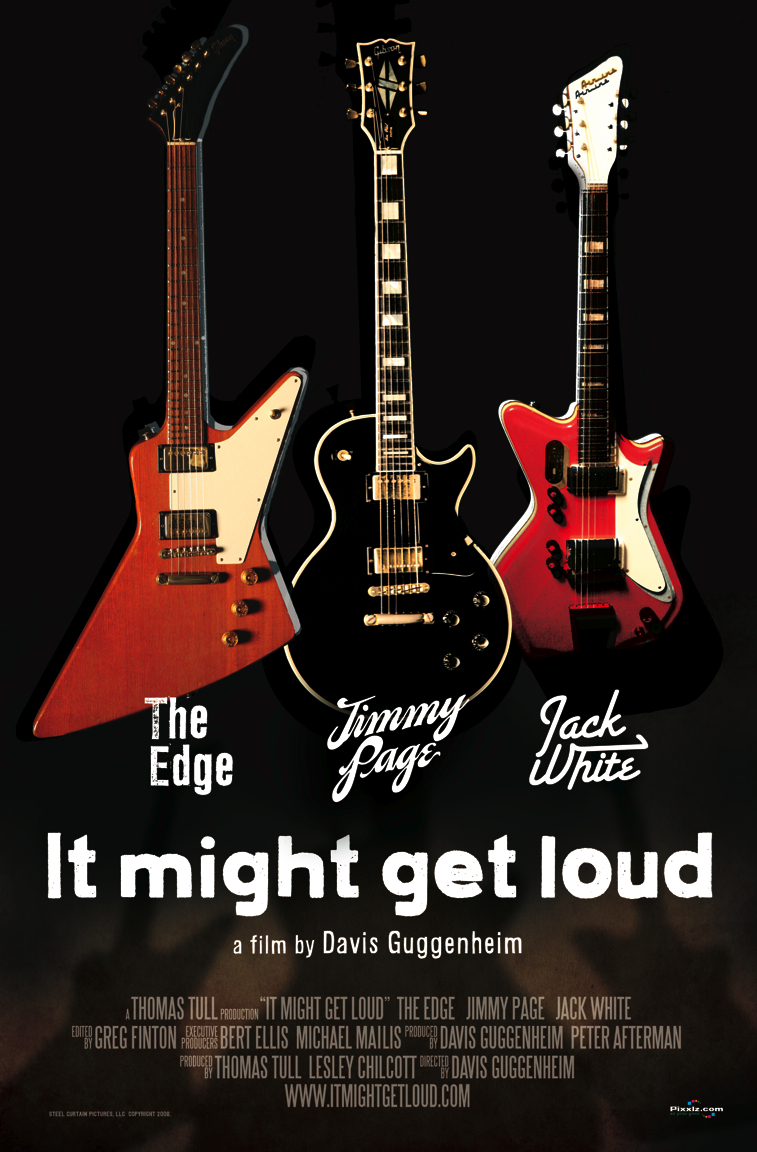
It Might Get Loud comes to DVD

Who hasn’t wanted to be a rock star, join a band or play electric guitar? Music resonates, moves and inspires us. Strummed through the fingers of The Edge, Jimmy Page and Jack White, somehow it does more. Such is the premise of It Might Get Loud, a new documentary conceived by producer Thomas Tull.
It Might Get Loud isn’t like any other rock’n roll documentary.

It Might Get Loud Rarely can a film penetrate the glamorous surface of rock legends. It Might Get Loud tells the personal stories, in their own words, of three generations of electric guitar virtuosos – The Edge (U2), Jimmy Page (Led Zeppelin), and Jack White (The White Stripes). It reveals how each developed his unique sound and style of playing favorite instruments, guitars both found and invented. Concentrating on the artist’s musical rebellion, traveling with him to influential locations, provoking rare discussion as to how and why he writes and plays, this film lets you witness intimate moments and hear new music from each artist. The movie revolves around a day when Jimmy Page, Jack White, and The Edge first met and sat down together to share their stories, teach and play.

Q&A WITH PRODUCER THOMAS TULL


How is this film different from other music documentaries?

While there have been a lot of performance documentaries, this one is really about the relationship between these three men and their instruments. We tried to show what drives the artists, what got them passionate as players, what made them pick up the guitar in the first place.

Where did you come up with this concept?

The guitar is something I am ardent about. I was thinking how, on a global level, the personification of contemporary music IS the guitar: from video games to debates over Top 10 guitarists lists, from rock to jazz to blues, this instrument captures everyone’s imagination. It was a subject I hadn’t really seen explored on film, from that perspective.

What was instrumental in you picking Davis Guggenheim to direct?

I’ve known Davis as a friend for a number of years. He is one of the best documentarians there is (as shown in “An Inconvenient Truth”), and he’s passionate about music too. He was the only person I thought of for this film.

Why did you want to make this film?

As a fan I wanted to see a movie that captured the essence of why people are so fanatic about the guitar. I wanted to tell that story through these three, particular artists.
How did you choose Jimmy Page, The Edge and Jack White? What was it like working with them?
It was almost like casting a movie. We wanted to show a wide range of styles and eras by focusing on three of the best players in the world, from three generations…and they said yes! Like many kids, I had a poster of Jimmy Page on my wall—he is a living legend. U2 is one of the greatest bands ever, and The Edge is a brilliant and distinctive player. Jack White is the new generation—cutting his own path but also keeping the guitar, and great guitar traditions, alive.

What do you hope audiences will experience while watching the film?

Honestly, I made this film for people like me, people who love music and the experience of a live show. When you love a band or a musician you want to know how and why they do what they do—what makes them tick. Davis was able to show this, to get inside these guys’ worlds and inside their heads in a way I don’t think any other music documentary has. I hope fans are as excited and fulfilled by seeing and hearing what he uncovered as I am. Page

What was your initial reaction when Thomas Tull first approached you about IMGL?

Thomas asked me to come to his office in Burbank - I had no idea why. I get there and he launches into this passionate pitch about the electric guitar and how no film has ever captured what it is that makes the instrument so great. He described the huge influence the electric guitar has had on him and our entire society.
Soon, without ever realizing it, I was hooked: totally into this idea of looking at the subject matter in a different way. The history of the instrument has already been thoroughly explored. Most Rock and Roll documentaries focus on car wrecks and overdoses; or they pontificate with sweeping generalities about how this guy was “God” and how “music was changed forever”…

Thomas and I didn’t want any of that. We wanted to focus on story-telling and the path of the artist, we wanted to push deeper beneath the surface.

Are there particular moments from the film that are your favorites?

There are so many.

We were filming in Jimmy Page’s home outside of London - which he has never allowed before – and he starts pulling out his favorite albums and playing them for us. These are the records that he listened to and learned from as a young musician. Just watching him listen to the records was incredible - and then he started playing air guitar!

We were filming Jack in Austin, Texas, and he’s playing this out-of-control guitar solo. Through the lens, I start realizing that he’s so focused and playing so aggressively that his hand is bleeding without him even knowing it.

Or Edge taking us to the classroom where he and U2 first met and rehearsed when they were 16 and 17 years old. This was just a regular high school classroom – they would meet for practice and spend the first ten minutes clearing all the desks to the sides before they could actually play.
In Tennessee, I asked Jack to write an original song on camera – and he did it – right in front of us… I don’t think I have ever seen that before.
Another time, Jimmy played us previews of two new tracks he was writing – both of which actually ended up in the movie.

What was the most challenging part of shooting this film?

The most challenging part of the project was weaving these three stories together. Each guitarist comes from a different generation, has different roots, different theories - sometimes in direct conflict of one another. I had a hunch that inter-cutting their stories would be really interesting, but was panicked at times - worried that it would never work.

How long did the shoot take?

Lesley Chilcott and I spent the better part of a year flying between London, Nashville and Dublin, following these guys. Sometimes it would be a very small crew, very intimate and sparse. And then we had a huge shoot on one of the largest Hollywood soundstages. There were seven cameras, the three rock stars, all their guitars and crew — it was like a three ring circus. I’ll never forget the look on the crews’ faces (and even those of us in the business who are so jaded) when Jimmy Page, The Edge and Jack White, turned on their amps and started playing together.


What I love about this movie, and what makes it so unique, is how the scale will change from Edge alone in his studio late night - to the three of them jamming on a Led Zeppelin track together with the volume full blast and the cameras capturing every angle.

What do you hope audiences will experience while watching the film?

I hope the audience will fall in love with these guys as much as I did. Not just as rock stars - that part is easy - but at individuals and artists who turned their individual life experiences into music: beautiful, raw, in-your-face, visceral, and transcendent. And I hope that audiences feel a touch of that child-like excitement that Thomas sparked in me, that first day we sat down.
Page

It Might Get Loud

No Line On The Horizon revisted

Have you been living under a rock for sometime? U2 got the Grammy nod last night, most fans feel the boys have been ripped off that they should have one a Grammy last time around. Well that’s all water on the bridge now.

We have written a couple of stories about the Album(CD,MP3) and we must confess again that we really did not like the work. It seemed out of sorts, different. Not anything we have heard before. Ah a concept was born. The Album grows, has legs which turned us around. We thought we would pull up a old story to refresh minds and provide some prosective on the album as well as provide new listeners a chance to comment.

The U2 album, ‘No Line On The Horizon’ was released March 2nd  2009. It is a great record, and greatness is what rock and roll and the world needs right now. From the grittily urgent yet ethereal title track all the way to the philosophically ruminative, spacey coda of ‘Cedars Of Lebanon’ it conjures an extraordinary journey through sound and ideas, a search for soul in a brutal, confusing world, all bound together in narcotic melody and space age pop songs.

“Let me in the sound” is a repeated lyrical motif (showing up in three songs, including current single ‘Get On Your Boots’). The theme of the album is surrender, escaping everyday problems to lose (or perhaps find) yourself in the joy of the moment. For Bono, it clearly represents an escape from the politics of his role as a lobbyist and campaigner into the musical exultation of rock and roll, yet the very notion of escape remains political, if only with a small p.

“Every day I have to find the courage to walk out into the street / With arms out, got a love you can’t defeat” is the inspirational bridge in an epic, explosive rock anthem ‘Breathe’, that could be set in Gaza or at your own front door.

Scattershot half-spoken verses fire images like news reports from the battleground of life (”16th of June, Chinese stocks are going up / And I’m coming down with some new Asian virus … Doc says you’re fine, or dying”) til he is “running down the road like loose electricity”, tension building in thundering drums and grungey two note guitar riff until it all lets loose in a soaring, anthemic chorus, as Bono tells us “I found grace inside a sound / I found grace, it’s all that I found / And I can breathe”.

The theme is even more explicit on ‘Moment Of Surrender’, a pulsing, dreamily gorgeous 7 minute weave of synths, silvery guitars, sub-bass, handclaps, Arabic strings and soulful ululating vocals, in which the narrator experiences a spiritual epiphany at the very prosaic setting of an ATM machine. It is a beautiful piece that provides the album’s beating heart and shows how far U2 can drift from their stereotype as a stadium rock band into unknown territory while still making something that touches the universal.

Musically, these songs might be the two poles of an album that switches between overloaded rockers and hypnotic electro grooves: the U2 / Eno divide. ‘No Line On The Horizon’ was produced by the professorially brilliant Roxy Music synth magus Brian Eno with his rootsy, muso collaborator Daniel Lanois, the same team that has presided over U2’s finest albums, Unforgettable Fire (1984), The Joshua Tree (1987), Achtung Baby (1991) and their latterday reclaiming of pop’s high ground ‘All That You Can’t Leave Behind’ (2000). The chief difference is that here they have been explicitly invited into the songwriting process, with 7 of the 12 tracks credited to both band and producers, and recorded with a six-piece line up featuring Eno on electronics and Lanois on acoustic and pedal steel guitar.

It is these songs, in particular, which push U2 towards the invisible horizon of the title, at once more linear (they tend to be driven, with singular grooves, often pulsing along on particular sound effect or rhythmic repetitions) and lateral (they defy obvious song-structure, choruses drop rather than soar, Bono’s rich, high voice subsumed into stacked harmonic chants). These tracks draw out of Bono a contemplative depth, so even the fantastically odd ‘Unknown Caller’ hits a vein of emotional truth, when the spaced out singer is cast adrift on the soundbites of computer and communications networks (’Password, you enter here, right now / You know your name so punch it in’) yet seems to find himself talking to the inner voice of God (”Escape yourself, and gravity / Hear me, cease to speak that I may speak”). Words and music dovetail in surprising ways that send the senses spinning.

Dave Long 2009 Left to their own compositional devices, U2 produce rock songs of high-wire adrenalin and in-your-face immediacy. It is almost a relief when they arrive like a troop surge in the middle of the album, reclaiming familiar territory with a burst of shock and awe. This is U2 on safe ground, ramming home the kind of smack bang crunch pop rock that they know radio programmers will fall at their feet for, yet there is almost too much melody and a surfeit of lyrical ideas. Current single ‘Get On Your Boots’ is the prime example, walloping along with two note punk rock energy, a low-slung heavy metal guitar riff, an expansively melodic psychedelic chorus and playful sloganeering lyrics in which Bono gets off the soap box to pay homage to the more prosaic pleasures of a beautiful woman in comically “sexy boots”. Along with the Oasis on steroids singalong pop of ‘I’ll Go Crazy If I Don’t Go Crazy Tonight’ and pop Zepplin-esque grooviness and shuffling beats of ‘Stand Up Comedy’, these songs are the albums most immediate and yet least resonant tracks. They are light relief from the more demanding adventures into new sonic terrain.

Bono’s worst reflex as a lyric writer is sloganeering, partly because he is so good at it. On the three songs just mentioned, he piles catch-phrase upon soundbite to build up a thematic idea, often one that plays with his image. So in ‘Stand Up Comedy’ the diminutive rock star in stacked boots warns us to “stand up to rock stars / Napoleon is in high heels / Josephine be careful of small men with big ideas” and in ‘I’ll Go Crazy’ he confesses (or complains) “there’s a part of me in the chaos that’s quiet / And there’s a part of you that wants me to riot.” It is all good fun but too often sounds like a series of t-shirt slogans rather than a song with a heart of its own. His phrasemaking is put to much better effect when it pared back so that the emotion of the song takes precedence, as on the strange, addictive title track, where he loses himself in the blur of a mysterious love, a person whose unknowability represents a kind of Godliness and who tells him “infinity is a great place to start.”

On ‘Breathe’, U2 locate the emotional and philosophical heart in an out and out ball busting U2 anthem (which Eno, apparently, asserts to be “the most U2 song” they have ever recorded). It is matched, in this respect, by the quite wonderful ‘Magnificent’, in which the U2/Eno/Lanois combo conjure up an instantly recognisable U2 classic in a love song with the flag waving pop drive of ‘New Year’s Day’. These are songs that will fill their fans with joy, but it is in the album’s more intimate, off beat adventures that U2 lock into something that forces listeners to sit up and take note of them anew. There is a busy-ness in terms of sonic tapestry, the meshing together of Edge’s sci-fi guitars and Eno’s synths providing an intricate, detailed soundscape that constantly tugs at the ears and mind, but the U2/Eno/Lanois songs hold the centre, slowly revealing themselves, demanding repeat listens. It certainly sounds like U2 (as do a lot of groups these days) but in its boldest moments is as fresh and ambitious as the work of first timers, not veterans 33 years on the road.

If it has a flaw, it may be in U2’s inherent tendency to want to be all things to all people, so that in album of surrender, they can’t quite let themselves go all the way. They still want to bat the ball out of the stadium everytime, and so instinctively counterbalance their desire to reach something otherwordly with the safe bets of crunchy rock hits. In that respect, it doesn’t have the innocence or singularity of ‘Unforgettable Fire’ or ‘Joshua Tree’, nor does it quite affect the bold re-wiring of their sound that was ‘Achtung Baby’. To me, it is probably the album ‘Zooropa’ was supposed to be, building on the sonic architecture of classic U2 and taking it into the pop stratosphere. But what a place for a band to be, in orbit around their own myth, making music that bounces off the inside of a listeners skull, charged with ideas and emotions, groovy enough to want to dance to, melodic enough to make you sing along, soulful enough to cherish, philosophical enough to inspire, and with so many killer tracks it might as well be a latterday greatest hits. It is, at the very least, an album to speak of in the same breath as their best and what other band of their longevity can boast of that?

Anyway that’s my opinion. I can tell you what Bono thinks, because he has been texting me. He comes (as he explicitly says on ‘Breathe’) “from a long line of travelling salesmen” and he would probably sell his album door to door if he could. “Lifeforce, joy, innovation, emotional honesty, analogue not digital, home-made not pro-tooled, unique sonic landscape,” are his buzzwords (although punctuation and spelling are mine). “I pinch myself every morning, evenings no longer a trial. Soul music for the frenzied, rock music for the still. The album we always wanted to make. Now we f*** off …”