One Tree Hill tribute to Pike River miners

Even the biggest concert of the year acknowledged the sombre mood of the nation.

U2’s Bono said the band felt privileged to be here especially at a time when hearts were aching and so raw.

Struggling for the right words to convey his condolences for the people of Greymouth, he said: “People deal with grief in all sorts of ways. In Ireland, we sing”.

Bono then launched into “I still haven’t found what I’m looking for”.

The names of the 29 mining victims scrolled across the screen as the band played “One Tree Hill”, a song penned for New Zealander Greg Carroll who was the band’s roadie.

Opening act Jay-Z also paid a rap tribute to the miners saying “they will always be in our hearts and they will always be forever young.”

The start of the 4th leg of the 360 Tour has begun in Auckland. The show was 4 years later after rehearsing a couple of days to shake off the holiday the boys arrived ready to play.

The setlist featured the debut of One Tree Hill and Scarlet Earlier Bono talked about the Pike River mine disaster with all 29 names displayed on the screen. Scarlet’s performance was the first of the October album leaving POP to be out so far.  Pretty much the setlist remained the same as most of the tour a couple of changes and positioning.

U2: 'We're still in the driving seat'

Scott Kara talks to U2’s Adam Clayton about how the band has evolved and why the game’s not over yet. This story published in the New Zeland Press - 

Bono describes him as “wildly and mentally endowed” with the “sartorial swagger of the Brat Pack”. He’s the Clark Gable - think Rhett Butler in Gone With The Wind - of the biggest band in the world.

Well, that’s what Bono reckons anyway. To us mere mortals, however, Adam Clayton is simply U2’s laid-back, cruisy and ever-so-stylish bass player.

Following a friendly reminder from his assistant, he calls me 25 minutes late from New York on Sunday morning (New Zealand time).

“Hi Scott. It’s Adam,” he says cheerily. He asks what the weather’s like.

It’s glum but it’ll be beautiful for their two Auckland shows (the first of which is tonight), I tell him.

“It better be or we won’t come,” he chuckles.

There’s some small talk about rugby, since the All Blacks have just played Ireland.

“Is it appropriate to ask who won?” he asks politely.

The All Blacks, but it was a typically determined Irish effort.

“It’s a bit too brutish for me. I’m more of a cricket fan,” he offers. It’s perhaps not surprising he likes the gentlemen’s game, considering he and bandmate The Edge were both born in England rather than being of pure-bred Irish stock like drummer Larry Mullen jnr and Bono.

“Actually, I don’t particularly like the cricket, I like the clothes,” he laughs.

So it turns out Bono’s sartorial observation is right.
Clayton, the man, is also friendly, forthcoming, and understated. The thing is, he’s almost pathologically modest.

“What comes across on stage is a pretty honest depiction of the way I see things,” he says. “I think people understand I don’t take all of this too seriously. It [being in U2] is something you get up and do every day and life carries on, regardless.

“But it’s an amazing thing to have grown up with your mates for 30 years,” he says, before reverting back to the most absurd understatement, “and to have made more than a good living out of it.”

Not that the 50-year-old is dismissive of what U2 have become since forming in Dublin in 1976 when 14-year-old Mullen put out a call on the school noticeboard for musicians to join a new band.

Back then, Clayton “was an unhappy teenager and music was the thing that always calmed me”. He admired The Who’s bass player John Entwistle, was into punk, and about to discover the funky delights of black music and rhythm and blues (“when bass gets funky, that’s when I get interested”).

These days, even though he’s rolling in it and feeling quite relaxed, he still has the same hunger and passion for music.

“There is some essential truth within music. You know, when you see a great band or a great singer you’re dealing with something irrefutable. And I’ve always followed that and still consider music in that way, and try to get to that moment where people reveal something that’s more powerful than feeling it.
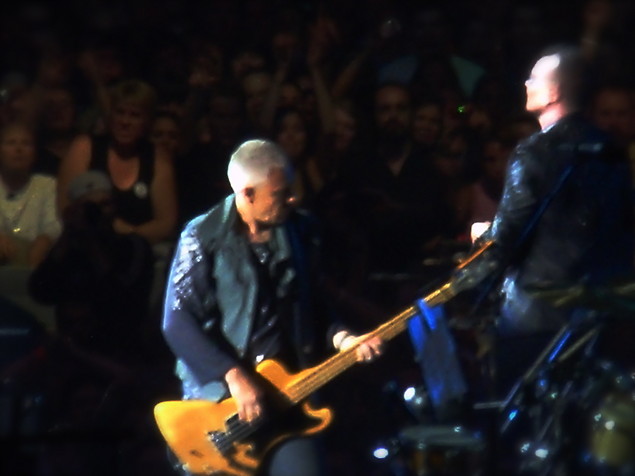
“I think what is interesting,” he continues, “is that rock ‘n’ roll was kind of invented as a teenage art form, and in some ways people diss whether or not you can continue to be relevant as you get older. I would say my experience, and the band’s experience, is that age has nothing to do with it - it’s about the quality of your ideas and how you execute them. I think we’re still very much in the driving seat now.”

That “good living”, as Clayton describes it, comes from having sold more than 150 million records, being one of the biggest touring bands around and having, in Bono, music’s ultimate statesman and crusader.

“He’s crazy, charismatic, and intelligent. It’s a specific job being a frontman and a lead singer and I think we’ve got one of the best.”

Even in an age of plummeting record sales, with the 360° tour, in support of latest album No Line On The Horizon, U2 could just be bigger than ever.

The band have embarked on some large-scale tours in their time, including 1992’s Zoo TV in support of Achtung Baby and the elaborate PopMart tour of the late 90s, but they don’t get bigger and more technically ambitious than the 360-degree staging and audience configuration of the current stadium tour.

With its giant, claw-like centrepiece and the cylindrical video screen, it is immense and revolutionary. “It’s probably our first stadium tour where we’ve had to learn how to make it work,” says Clayton.
While the set list for the tour includes all the band’s big songs, like Where The Streets Have No Name, Pride (In The Name Of Love), and Vertigo, Clayton says they are also playing a few new songs, as well as some surprises like The Unforgettable Fire, the title track off their beautifully ambitious, yet underrated, 1984 album, which was a highlight of the 360 Live At The Pasadena Bowl DVD released earlier this year.

“The shows are kind of interesting because not only is the band playing really well - we’re really settling in nicely now - but we’re now being brave enough to add in some new songs along the way. It’s a bit of a first and, I have to say, it’s a bit risky to be playing new songs to a stadium full of people. But it seems to go across pretty well.”

Brave? Risky? You’re in U2, man.

“Well, that’s true. But there are things that you don’t do and one of them is, when you’re playing shows to very large amounts of people, you don’t give them anything that means their attention will wander. You’ve got to have all the bells and whistles or they’ll go and get a hot dog. You can do it in a club or an arena because you can lose them for a song and you can pick them back up again, but in these bigger settings it is risky.”

These new songs, he says, could be the start of a new, fresh period for U2. Clayton believes U2’s albums can be grouped into cycles. So 1980’s raw, impassioned debut Boy, 1981 follow-up October, and the anthemic and revolutionary War from 1982 were formative records.

Clayton describes as “a convulsion of adolescence” in the notes of the 20th anniversary collectors’ edition of The Joshua Tree. The next three albums - the The Unforgettable Fire, the mega-selling Joshua Tree (1987) and, arguably the band’s best album, Achtung Baby (1991) - were where U2 found their true identity.
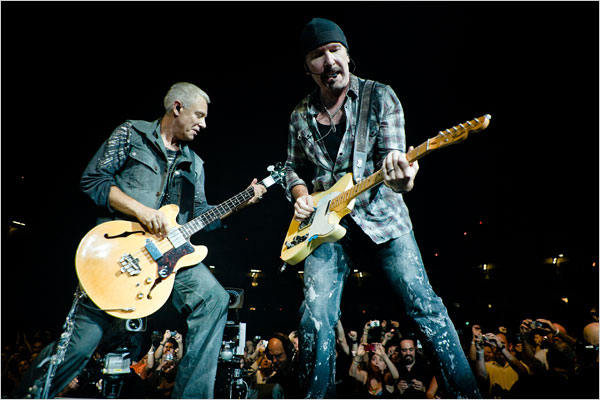
“When I think of [those three records] I see one of our great creative runs as a band, a series of albums which represent the ‘core values’ of U2,” he says.

After Achtung Baby - “industrial, underground and noisy” - they got even more experimental, dancey and electronic in focus on Zooropa (1993) and Pop (1997).

The latter, believes Clayton, started out being more mainstream but was taken over by the influence of the British dance music scene, which comes through on lead single Discotheque. It’s arguably the band’s weakest album - yet given its shot at doing something different, it’s hardly a dud.

The band’s next phase signalled the start of the current era, a return to a more classic and traditional U2 sound.

“We really wanted to bring it back to being a band again. We stripped it back down to reveal what a good band we had and that really was All That You Can’t Leave Behind. We decided consciously to go back indoors and play indoor concerts because at an indoor concert you don’t need to have as much production value and you can pretty much be on stage and do it with the music alone.

“That cycle continued through How To Dismantle An Atomic Bomb and on No Line On The Horizon, which although it sounded like a band that had grown, we were still very much working in that stripped-down format, and it’s probably the end of another cycle.”

The band are working on new material at present and the next album will be different again.

“It is quite a fresh area for U2 to be working in. I don’t think it’s going to sound like familiar U2 territory at all. The creative process is always exhilarating and fun, because you can go as far as you like.”

And that’s all he’s saying about the new songs until they play them live - so pick your moment when you go and get that hotdog.

By Scott Kara
Live from Auckland

Back so soon? It’s only been four years - and one new album - since U2 last played in Auckland.

That matches the interval between their 1989 and 1993 visits. Back then, between the earthy, earnest Lovetown tour - one of the biggest this country has ever seen - and the extravagant Zoo TV shows, the band not only reinvented itself musically but reconfigured how bands of their stature played stadiums.

Tonight, 40,000 of us get to see if they’ve done that again.

Last year’s No Line On The Horizon album is possibly the last in a back-to-basics trio which started with 2000’s All That You Can’t Leave Behind and 2004’s How To Dismantle An Atomic Bomb.

It’s also achieved a fraction of the sales of U2’s other noughties albums, possibly due to a lack of any definitive hits.

But it’s easy to imagine Horizon tracks like the stomping Get On Your Boots causing the same sort of excitement down front that earlier-generation noisy anthems did.

And the ballad Moment Of Surrender should have the cellphone-as-cigarette-lighter-waving brigade out in force.

So this time U2 have something to prove. But they also have a very big platform to do that from.

All the visual evidence suggests that the “Claw” stage of this 360° tour is a great leap forward from the 2006 shows, which didn’t exactly lack for spectacle or whiz-bang production.

Of course, U2 and New Zealand go back a long way. Local fans were early adopters of their early albums. Then there was One Tree Hill, the song written after the 1986 death of Greg Carroll, their Kiwi stage manager.

Clayton says Auckland - and New Zealand - are still special for U2 to visit.

“The connection with Greg, and the affinity with Greg and our history with your country is strong. As well as that I think it’s that kind of special bond that two island cultures have with each other. In the early years, when we were spending a lot of time touring America and Europe, when we came down to the Southern Hemisphere there was something very reassuring about landing in New Zealand. We always have fun here, we get on with the people very well - and the crowds are fantastic.”


U2's rehearsals in Auckland

Thursday begins the 4th leg of the 360° Tour with the 1st of 2 shows in Auckland. The boys held rehearsals earlier today at Mount Smart Stadium.

They have been doing 2 a day sessions, “we have been on holiday time to shake that off “The early session featured Sunday Bloody Sunday, Walk On and a complete run thru of Boy Falls From The Sky.

The second rehearsal the band focused on the main setlist and a couple of extras.

  1. End of In A Little While
  2. Miss Sarajevo
  3. Boy Falls From The Sky
  4. City Of Blinding Lights
  5. Vertigo
  6. Crazy Tonight / Relax (snippet)
  7. Sunday Bloody Sunday / Get Up Stand Up (snippet)
  8. Scarlet
  9. Walk OnOne Tree Hill
  10. Ultra Violet
  11. Boy Falls From The Sky
  12. Edge plays the intro to Where The Streets Have No Name

Well that’s all for tonight – The show begins tomorrow. ( really its today in NZ)

Sourced: U2GIGS for Setlist and snippet -

U2 Landed in NZ

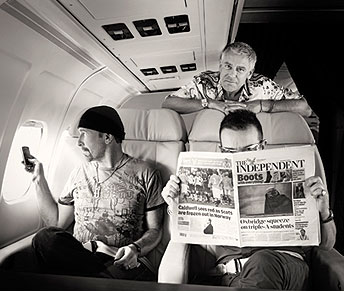
U2 has landed - and wasted no time in tweeting about the New Zealand experience.

Guitarist The Edge has posted a photo of One Tree Hill on his Twitter account two days before the Irish rockers play the first of two shows at Mt Smart Stadium.

The band has a connection to the Auckland landmark - One Tree Hill is the title of their 1987 single written after the death of Bono’s New Zealand-born assistant Greg Carroll.

Concert promoters and record label representatives are keeping the band’s movements a closely guarded secret.

However it is understood the rockers arrived on Monday morning on an Air New Zealand flight.

The last time U2 was here, in 2006, members stayed at the $25,000-a-night Great Mercury Island estate, owned by Sir Michael Fay, and were choppered to Auckland for concerts.

The private island, off the coast of the Coromandel, give guests access to two homes, 12 beaches and a private chef.

Other favoured Auckland accommodation for the rich and famous include Wells Bay lodge on Waiheke Island - with the required helicopter pad and $750-a-night suite at the Hyatt Hotel for each of the four musicians.

Supporting act Jay-Z has also arrived in the country but it is not known if his wife, singer Beyonce Knowles, is with him.

The rapper’s entourage was spotted renting a fleet of luxury Audi vehicles, celebrity watch websites said.

Last night, crews were putting the final touches to the 590 tonne stage set complete with the “claw”, a 50m three-legged structure.

The band’s 360 Degrees Tour, one of rock’s highest grossing productions, involves 250 personnel as well as local crews at each venue.

More than 50,000 tickets sold in less than an hour for the Thursday night show but there are some still available for Friday.

Has U2 Arrived to NZ ?

U2 2010 360 Tour Its a question ? Has anyone in NZ spotted the boys from Ireland. We have heard some little birds suggestiong that the boys have arrived. Yet we stil have not seen any photos or comments from the fans. 

Crews are working 16-hour days to get ready for the biggest concert of the year when the U2 360 Tour hits the country.

The largest temporary grandstand ever built in New Zealand has gone into the north end of the  main arena of Auckland’s Mt Smart Stadium, which will hold nearly 12,000 fans.
   
 At the southern end the installation of a second 10,000-seat temporary stand has been completed this weekend in time for the shows on  Thursday and Friday.

Much of this  second temporary grandstand has been trucked up in a massive logistical operation from the World Rowing Championships that were held at Lake Karapiro earlier this month.  A team of 40 men has been working long shifts  to get the southern stand completed on time.

Because of the extra seats, the promoters have been able to make a final release of tickets at all levels for the Friday’s show.  Thursday night’s concert is sold out.

Joining U2 as their special guest will be US rapper Jay-Z in his first performances in New Zealand.  The Auckland concerts will be the only New Zealand appearances by U2 and kick off the Australasian leg of the 360 Tour, which is already the highest


U2 FAQ Celebrates "Boy"


Bono / U2TOURFANS Thirty years after the release of U2’s landmark debut album Boy and its enduring single “I Will Follow” a new book titled U2 FAQ: Anything You?d Ever Want to Know About the Biggest Band in the World?And More is set for a November 2010 release from Backbeat Books. Written by award-winning music journalist John D. Luerssen, the 450+ page tome explores the 35-year history of the revered Irish band.

The latest in Backbeats acclaimed FAQ series (Fab Four FAQ, Fab Four FAQ 2.0, Pink Floyd FAQ), U2 FAQ follows Bono, The Edge, Adam Clayton, and Larry Mullen Jr.

From their start at Dublin’s Mount Temple School in the fall of 1976 up to their recent re-emergence following Bonos debilitating back injury earlier this year. U2 FAQ boasts rare artifacts and photos culled from fans and collectors worldwide plus an insightful and heartfelt introduction by John Thomas Griffith, the one-time frontman for Red Rockers, an opening act on U2’s 1985 Unforgettable Fire trek.

U2 FAQ explores the creation of Boy, now celebrating its 30th anniversary, in full detail and includes: The March 1978 development and live debut of “Shadows and Tall Trees”; The 1979 EP Three U2 made for CBS Ireland; Signing To Chris Blackwells Island Records; How the suicide of Joy Divisions Ian Curtis impacted the course of the album; A trial run with Siouxsie & the Banshees producer Steve Lillywhite recording “A Day Without Me”; U2’s September 1980 “Mondays at The Marquee” London shows in advance of Boy; The early support of Boston DJ Carter Alan; Controversy over the Boy sleeve that led to its alteration for sale in the U.S. market; Breaking bottles and banging bicycle spokes on “I Will Follow”; “Twilight” earns U2 a strong gay following; Why manager Paul McGuinness thought Stories for Boys was about masturbation; and why the NME called the band really quite awful at the same time Melody Maker praised them for playing truly great rock music which inspires the heart.

What makes U2 FAQ different from the other books written about the band, is thataside from all of the information it gathersit explores the bands vulnerabilities, Luerssen says. I think that with U2’s enormous popularity, its easy to forget that Bono, The Edge, Larry, and Adam are human beings like the rest of us. And I explore that in chapters like Broken Nose to the Floor: Public Debacles, Dangers, and Embarrassments, and Dont Talk Out of TimeTrue U2 Stories.

From 10 Bands Who Have Opened for U2 (including the BoDeans, Kings of Leon, and Pearl Jam) and U2’s odd taste in cover songs. to the story behind Allen Ginsbergs appearance on U2’s 1997 television special and why U2 abandoned their plan to record an album with legendary producer Rick Rubin after laying down two tracks with him, U2 FAQ is stuffed with information for casual fans and die-hards alike.


U2 to perform at Engenhão in Rio !

U2 360 TOUR / Dave Long According to sources the band will be playing in Apirl 2011 - The group is expected to perform at the Stadium Engenhao (RIO). The boys have only played RIO once before (1998) According to sources Morumbi Stadium also is consdiered to be a stop on 8th, 9th and 10th of Apirl 2011.

Suggestions have been made that U2 could be closing the World Cup 2014. This story came up after rumors about the governor of Ro De Janeiro (Sergio Cabral) gave the boys a presentation.

Chilean newspaper “La Tercera”. According to the newspaper, U2 will come to South America in 2011 to do shows in Argentina, Chile and Brazil. The dates of the tour concerts 360 degrees here in Brazil will only be released once the contracts in Argentina and Chile are already closed. T

Although they have not yet confirmed tour dates, the same news shows that the U2 shows in Brazil will take place in March 2011.  On the official website of U2, U2 at the 360 ° Tour 2010/2011, are blank information about concerts between October 2010 and May 2011.

Although the shows are rumored to happen in March 2011 in Brazil, still no word on ticket sales for U2 in Brazil in 2011, local presentations (Maracanã, Morumbi …) and cities are not yet defined.

But you know you want to go to shows that the forecast sales of tickets (entries) should already start in October or November. Wait for more information about tickets to U2 in Brazil in 2010.