Artifical Horizon Arrives

Artificial Horizon / U2In the summer of 1992, U2 achieved the unthinkable: having commissioned Perfecto production duo Paul Oakenfold and Steve Osborne to remix ‘Even Better Than The Real Thing’, they reached number 8 with their remix just one month after the original song had peaked at number 12. The power of 1990’s club culture was truly coming to the fore and U2 were one of the first bands to fully explore the idea that a remix could actually improve on a song’s original grooves. It was the first time that the band had explored the electronic world - and the electronic world loved them back.

Fast-forward to 1995 and U2 were again ahead of the curve with their exclusive Propaganda fan-club release ‘Melon’, which saw the same production duo remix the compilation’s title track which Oakenfold turned into a bona fide club anthem around the world. ‘Melon: Remixes for Propaganda’, was also full of electronic remix gems like Massive Attack’s brooding take on ‘Mysterious Ways’ and a hip hop remix of ‘Numb’ by Soul Assassins, a loose collective of musicians and graphic artists affiliated to Cypress Hill.

Taking some of the best songs from ‘Achtung Baby’ and ‘Zooropa’, the selection and decision was incredibly astute: not only was it only available to Propaganda subscribers, it also became an instant collectors item. Almost two decades on, it’s still one of the coolest items in U2 fan collections today.

Of course, U2’s shoes remained glued to the dance-floor with ‘Pop’ and more recently with remixes of ‘Elevation’ and Paul Epworth’s frantic re-fix of ‘City Of Blinding Lights’. But now - 18 years on from ‘Melon’ - U2 have returned to the concept that originally bore fruit and are bringing us ‘Artificial Horizon.’ Like ‘Melon’, these remixes are either unreleased or so rare that you would have to have been in the studio to have actually heard them before.

Many of these mixes will be known to the electronic heads within U2’s fan-base - the Justice remix of Boots was rumoured to have been a bootleg for quite some time - but not any more, as it’s one of the standout remixes here. If we’re going to be precise, this is certainly the first time that remixes from Fred Falke, Fish Out Of Water and Hot Chip have been made physically available for the U2 fans. And the Frankie Goes To Hollywood-referencing ‘I’ll Go Crazy If I Don’t Go Crazy Tonight’ (Live U2360 Remix) has never appeared anywhere before.

So what does ‘Articial Horizon’ tell us? Well, like ‘Melon’ before it, it covers refashioned songs from more than one album. A quick scan reveals that the CD starts with the Influx mix of ‘Elevation’ (from ‘All That You Can’t Leave Behind’) and includes several songs from ‘No Line…’ (including ‘Get On Your Boots’ and ‘I’ll Go Crazy If I Don’t Go Crazy Tonight’ as well as songs from ‘All That You Can Leave Behind’ (David Holmes’ daringly dark remake of ‘Beautiful Day’) as well as a cool, ambient remix of ‘Staring At The Sun’ from ‘Pop’ by Brothers In Rhythm to close.

In the case of Hot Chip, Fred Falke and Justice, it’s a reminder that U2’s feet and heartbeat have kept up with new producers from London and Paris alike and in the case of Nine Inch Nails, they’ve walked as far as Beverley Hills. And in the case of David Holmes and Danny Saber, they’re dabbling with producers who have re-modelled their music before. Fans may remember that Belfast producer David Holmes remixed ‘Discotheque’ while Danny Saber - who retools ‘Happiness Is A Warm Gun’ here - previously remixed ‘Satellite Of Love’ from ‘The Million Dollar Hotel’ soundtrack.

 Reference: U2.com

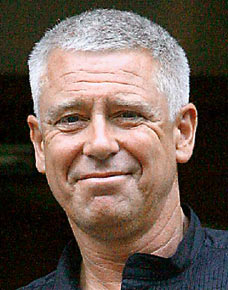
Adam Said what ?

HE’S THE EVER-URBANE architect of U2’s prowling basslines and, courtesy of Achtung Baby’s sleeve art, the only member of U2 whose “old chap” is in the public domain. But Adam Clayton also has a plausible explanation of No Line On The Horizon’s tortured delivery and that’s not all. Did Brian Eno really throw “the rattle out of the pram”? And what did Bono get Adam for Christmas? In the director’s cut of an interview printed in this month’s MOJO magazine, all will be revealed… Your host: Keith Cameron.

It’s never a smooth process, finishing off a U2 record, and this seems to have been no exception. Was there much chopping and changing down to the wire?
There was sort of an 11th hour scenario, because we got caught up on the running order towards the end, primarily because we’d all come to the conclusion that How To Dismantle An Atomic Bomb had suffered by having a compromised running order, and we didn’t want to make the same mistake this time around. So, we pulled White As Snow out of the ‘maybe’ file, and that seemed to balance some of the up-tempo rock tunes. It gave the listener a break.

We had another track called Every Breaking Wave which, if we’d included it, would have made for a very long record. Anyway, we decided that song just hadn’t reached its potential, so, we put it back in the cupboard for the next record (laughs).”

Before Christmas, I heard a track called Winter. Has that become something else?
That was possibly going to be on the record and possibly part of a soundtrack for an upcoming movie and it didn’t make the record but may still be part of that movie soundtrack. [NB since this interview Winter has been confirmed as part of Anton Corbijn’s ‘visual accompaniment’ to No Line On The Horizon, entitled Linear, included in the Deluxe package of the album]

It sounds like you’ve got a lot of material. Could you release another album quite soon?
Well we could, and it’s part of our plan to not leave it too long. Once the tour is up and running there would be no reason why we couldn’t find a week and go into the studio and work on things. It sort of depends on Bono and Edge’s commitments; they’ve got a Spiderman project in the works too (laughs).

So, Spiderman permitting, you could be working on the new album during the next tour?
It would be nice to continue working in the same way. Instead of doing this record in one solid bloc, we sort of did two-week sessions with Brian and Dan, as writing collaborators, and out of those sessions came a lot of really good raw material. But it wasn’t until April of last year that we went into the studio and said, Look, no one gets out of here until it’s finished.

The breaks meant we could come back to things. And, I think that helped everyone. I think it worked really well for Edge from a compositional point of view; he really got to look at how the album hung together and to see what was missing musically. I think it enabled Bono to complete and fully resolve some of the lyrics.

Adam/ Bono/ U2TOURFANS 2009Originally we were looking at a deadline of last August but I think by taking a break instead of trying to push through we were able to come back to it and to pull in some new material. For instance, I’ll Go Crazy If I Don’t Go Crazy Tonight came out of that period and Every Breaking Wave came out of that period, even though the last one didn’t get onto the album. It just made for a really good record and I think, from Larry’s and my own point of view, it gave us a chance to live with the material and to really have an influence on how it was finished.

So I think the breaks stopped us getting snow-blindness. I also think there was a fundamental shift in the band, in that the material became much more internalised. It wasn’t striving to reach out to connect to people; it became much more about inviting people to come in and be part of the experience.

That’s interesting. I would say the last two records broadly fell into the ‘striving to connect’ category…
I think that was the end of a period. When we were coming through the ’90s and we were playing a lot of big outdoor shows, we lost some connection with ourselves because it was about reaching out to those really big places and that was how we probably conceived a lot of that music. All That You Can’t Leave Behind was the beginning of the shift back, as we knew we were playing relatively small places, but they were much more musical experiences. I think it took the last two records for the band to value what we had together, to value our DNA. I think this record capitalizes and makes the most of that experience.

Did Daniel Lanois and Brian Eno’s writing credits make them try harder?
I don’t know about try harder but I think they were happier! [laughs] I think they both bring a phenomenal commitment to a U2 project in very different ways. Danny really does stay in the trenches and is the last one to leave the building. Brian tends to be the first man in in the morning, working on things that will influence the attitude of people, get them thinking in creative and inspired ways.

Long, creative relationships are unusual in rock’n’roll, but the mileage and the knowledge and the understanding from having been around with them for 20 years makes them a pleasure to work with. And they haven’t really changed much. They’re still questioning in the same way.

Who has the final say?
I think it is us. And it’s probably swung more that way. We’ve moved into a way of working where Brian will commit to a two or a three-week period then he goes off and does his other projects. And the same would be true of Danny [Lanois]. But there’ll be other periods when we’re just on our own.

It does come down to us ultimately. It used to infuriate Brian to the point of throwing the rattle out of the pram. Now I think he observes it and I think he has a healthy respect for it. Towards the end of the record, when we were in Olympic [Studios, South West London], he had a commitment to finish the record I haven’t seen in him for a long time. He was there and really fighting for the record. Like a true midwife would be.

How early on were you aware of what kind of album you were making?
I think there was a lot more clarity around this record and I can’t explain why. It just felt like people knew what this record was. Again, from a very personal point of view, it was like that from the beginning. When we first got together and started to play together, the sound that happened, there was a richness to it. The sound seemed to be a product of the time it was being created in. It was very unusual. The complex, sort of North African feel that’s a part of the record was there right from inception.”

Did the environment in Morocco have a marked impact on the finished product?
I think there was a time when it was more dominant. Earlier on in the record there was a time when it was a bit more challenging and questioning in a cultural sense - east and west and the war was a bit more central to the record. And then it seemed to shift again and it became the record that it is now. I think you’re aware that something has happened in the world. The world has changed and this record doesn’t actually stand up and tell you that because you should know it anyway - but it acknowledges that things are different now and there’s a different value system. I don’t know if you’ve read The Road by Cormac McCarthy? That has a very interesting, brooding atmosphere about it, a sense that you know that something has happened but you’re not quite sure what it is. I think this record has that quality.

Does Eno like bass?
[Laughs] He loves it if he’s playing it!

Do you and Eno always see eye to eye musically?
We have a really healthy respect for each other. It’s probably taken a little while to get to that point but quite often we’ll be digging in the same hole. The great thing about Brian is that he acknowledges his limitations and I have learned to acknowledge mine. He’ll sometimes take something I’m doing and I’ll think, ‘Oh shit, he’s playing my bass part again!’ And I have to go and do something else. But the result is always better. And quite often it’ll be the other way around: he’ll say, ‘Why don’t you play this?’ Or he’ll give me a part and then he’ll figure out something else around it. It’s very much a collaborative experience.

The thing that I love about Brian is that he gets so excited that he’s got a group of people to play with. Because a lot of his time is spent on his own. I think that’s probably why he can be a little impatient. By the time he’s worked something up he just wants to get off it and on to something else.

Black Eyed Peas’ will.i.am is credited on I’ll Go Crazy… What does he contribute?
Will helped early on in the arranging of the demo ideas in the summer. Then when he came in we recut it and he helped us push it up the hill. The final version is a recut that we did late on when we’d kind of played it in a bit. But he’s a lovely, inspiring man to be around.

The version I heard before Christmas is almost more over the top than the version on the record…
You’re absolutely right. We did try and take some of the bells and whistles off it and bring it back down to earth. It doffs the cap towards Motown and it’s great to hear the band do a song like that. Unashamedly it’s a pop song and it’s got a pretty good one-two [chuckles]”

Interesting to hear French horns on a U2 record. On at least two songs I think.
Yeah. They’re a lovely mournful sound. Real brass is something that you don’t hear very much and it is a fabulous sound. Those tunes inherently had those brass parts written into them. But we did find a great horn player who came in and embellished them.

It works especially well with the guitar solo on Unknown Caller…
And that is one of Edge’s great guitar solos. Fabulous.

The internal chemistry of the band must shift over time and the process of making a record must be intense. Have you all come out the other side happy?
Erm… [laughs] I think people are more relaxed now. When you have the kind of success that we had early on it brings a kind of responsibility with it. For some of the band, that became a burden that we fought against and wrestled with. But now instead of thinking that the band is limiting we feel it is very free. And we can do things that we can’t do as individuals.

Most of us daydream about being millionaires. Do you ever wonder what you’d do if you woke up and weren’t a millionaire?
Primarily, I don’t identify myself as a millionaire but I am grateful on a regular basis that I don’t have to think about [money] too much. If things changed, I could live within my means. I’d probably find it difficult but it wouldn’t be the end of the world.

There’s a lot of talk about the concert business downsizing. Could U2 tour on anything other than a massive scale?
I think it can change, depending on our appetite for big tours or for long tours or the economics of it. But for the tour coming up, I think we want to take on the big places again. It feels right to play the songs in stadiums this time. But I don’t know what songs we’re going to play yet. We’re about to go off and do some promo for TV and when we get back from that we’ll be rehearsing for the tour.

What did Bono get you for Christmas?
[Laughs nervously] Actually, we don’t do Christmas presents any more. It was negotiated a few years back. We tend to pass books around.

Interview by: Keith Cameron

http://www.mojo4music.com/blog/2009/02/exclusive_adam_clayton_qa.html

50 Things to Love About Adam Clayton

Bono and Adam / U2 360 Tour 2009By: Marylinn Maione

By now everyone thats a U2 fan knows its Adam’s 50th Birthday. If you have not had a chance to check out Marylinn’s story on ATU2 - We recommend it -

50. “As for the good parts, we’ve got great fans. They follow us through all sorts of changes, and in many ways they encourage us to continue pursuing music that excites us. But the best thing really is that I get to hang out with three friends and musicians. And if I get stuck, in whatever way, I’ve got three guys who are willing and able to help. That’s a great thing.” — Adam, on the best thing about being in U2, in an interview in 2000 for Bass Player Magazine.

http://www.atu2.com/news/50-things-to-love-about-adam-clayton-on-his-50th-birthday.html


You say its your birthday !

Adam Cayton Adam Charles Clayton (born 13 March 1960)

Clayton has resided in County Dublin since the time his family moved to Malahide when he was five years old in 1965. Clayton is well-known for his bass playing on songs such as “New Year’s Day”, “With or Without You”, “Get on Your Boots”, and “Magnificent”.

His work on No Line on the Horizon has been cited as his best bass playing. He has worked on several solo projects throughout his career, such as his work with fellow band member Larry Mullen Jr. on the theme of 1996’s Mission: Impossible. Clayton, as a part of U2, has won 22 Grammy

Clayton is the elder child of Brian and Jo Clayton, born on 13 March 1960 in Chinnor, Oxfordshire, England, when Clayton was five years old, his family moved from Oxfordshire to Malahide, County Dublin, where Clayton’s brother Sebastian was born. The Clayton family became friends with the Evans family, with their sons Dik and Dave (more commonly known as The Edge), who were both in the original group, Feedback, that spawned U2.

Clayton attended boarding school first at Castle Park School in Dalkey, then at St. Columba’s in Rathfarnham. He later changed school to Mount Temple Comprehensive School in Dublin, where he met fellow band mates Paul “Bono” Hewson and Larry Mullen Jr., and was reunited with his boyhood friend Dave “The Edge” Evans. Mullen had posted an advertisement on the school bulletin board for musicians to form a band with him; Clayton showed up at the first practice, which also included Dik Evans, Dave Evans’s older brother, Ivan McCormick, and Peter Martin, who were two of Mullen’s friends.

McCormick and Martin left the band soon after its conception. While the band was a five-piece (consisting of Bono, The Edge, Mullen, Evans, and Clayton), it was known as Feedback. The name was subsequently changed to The Hype, but changed to “U2” soon after Evans left the band. Clayton also served as the band’s first manager before Paul McGuiness, a more experienced manager, was hired, because Clayton had left school earlier.

Adam Clayton In 1981, around the time of U2’s second, spiritually charged album, October, a rift was created in the band between Clayton and McGuiness, and the three other band members. Bono, The Edge, and Mullen had joined a Christian group, and were questioning the compatibility of rock music with their spirituality. However, Clayton, with his more ambiguous religious views, was less concerned, and so was more of an outsider, until Bono’s wedding to Alison Hewson (Neé Stewart), in which Clayton was the best man.

In August 1989, Clayton made newspapers around the world when he was arrested in Dublin carrying a small amount of marijuana. However, he avoided conviction by making a large donation to charity, and has later been regretful, saying “It was my own fault. And I’m sure I was out of my head – emotionally apart from anything else. But it is serious because it is illegal.” Clayton has also had alcohol problems, which came to a head on 26 November 1993 when he was so hung over that he was unable to play that night’s show in Sydney. After that incident, however, he gave up alcohol.

In 1995, after the Zoo TV Tour and Zooropa album, Clayton headed to New York with bandmate Mullen to receive formal training in the bass; until then Clayton had been entirely self-taught. During that period, he worked on U2’s experimental album, released under the pseudonym “Passengers”, entitled Original Soundtracks . That album features one of the few instances where Clayton has appeared as a vocalist; he spoke the last verse of “Your Blue Room”, the album’s second single. Prior to this Clayton had only provided live backing vocals to tracks such as “Out of Control”, “I Will Follow”, “Twilight” and “Bullet the Blue Sky”. Since 1998’s Popmart tour Clayton has not sung live in any capacity for the band.

In 1996, while still in New York, Clayton collaborated with Mullen to re-record the Mission: Impossible theme.

Adam Clayton Clayton has remained a bachelor through his time with U2. During the early 1990s, he was involved with and briefly engaged to British supermodel Naomi Campbell.

He also had a long-standing relationship with Suzanne “Susie” Smith, a former assistant to Paul McGuiness; they were engaged in 2006, but the pair broke up in February 2007.

The High Court ordered the assets of Clayton’s former housekeeper and PA be frozen after it was reported that she misappropriated funds of €1.8 million.

As a bass player, Adam Clayton’s most recognizable basslines include “New Year’s Day”, which evolved out of an attempt to play Visage’s song “Fade to Grey”, and “With or Without You”.

His style includes Motown and reggae influences, and cites artists such as Paul Simonon of The Clash as influences on his musical style.

When Clayton first joined the fledgling U2, he did not have formal training in the bass.In the band’s early years, he generally played simple parts in 4/4 time.

Bono said of Clayton’s early bass playing, “Adam used to pretend he could play bass. He came round and started using words like action and fret and he had us baffled. He had the only amplifier so we never argued with him.

We thought this guy must be a musician, he knows what he’s talking about and then one day we discovered he wasn’t playing the right notes, that are what wrong, y’know are?”

Clayton has sung on several occasions, including on the song “Endless Deep”, the B-side to the single “Two Hearts Beat As One” from 1983. He also spoke the last verse of “Your Blue Room”. Clayton can be heard speaking on “Tomorrow (‘96 Version)” (a rerecording of “Tomorrow” that he arranged) a song from U2’s 1981 album October. He plays the guitar on a few occasions, most notably the song “40”, where he and guitarist The Edge switch instruments. He also plays the keyboard introduction to “City of Blinding Lights”.


Clayton’s basses include:

Fender Precision Bass

Fender Jazz Bass

  • Gibson Thunderbird Bass
  • Gibson Les Paul Triumph Bass
  • Gibson Les Paul 70’s Recording Bass, unknown model
  • Lakland Joe Osborn Signature Bass
  • Lakland Darryl Jones Signature Bass (with Chi-Sonic pickups)
  • Auerswald Custom Bass
  • Epiphone Rivoli bass (seen in the get on your boots’ music video)
  • Status John Entwistle Buzzard Bass

Throughout his career, Clayton has used both Precision and Jazz basses. His first bass, however, was a dark brown Ibanez copy. He uses Ashdown amplifiers and blue Herdim picks, as does bandmate The Edge. Clayton’s Precision basses are modified with a Fender Jazz neck; in an interview with Bass Player magazine, he said that he prefers the Jazz bass neck because it is more “lady-like” and is a better fit in his left hand.


Happy Birthday Adam

Adam Calyton / U2TOURFANS 2009Happy Birthday Adam from your friends at U2TOURFANS.

 U2 Fans all day today come back for stories, interviews, photos and videos related to Adam. - Send your well wishes on facebook.

Neil McCormick and Killing Bono

Cashman Snubed as Auction ends

IT WAS a case of the unforgettable buyer for U2 stylist Lola Cashman, who still hasn’t found what she’s looking for.

In fact there was literally no desire for a string of U2 trinkets that Ms Cashman had put up for auction — earning just a quarter of the expected amount.

The unique online auction for some of U2’s personal items from the band’s early days has raised just €10,000 of the expected €40,000.

The 16-item collection was put up for auction on a US website with just six items bid for in total. All the items up for grabs hail from the band’s early days including a number of the boys’ personal items such as a pair of Larry Mullen’s used Converse shoes and a chipped navy blue mug used by Bono and The Edge.

However, the final figures of the auction show that only six of the sixteen items generated bids, which totalled €7,000 — a far cry from the €40,000 that was originally predicted.

As the auction was coming to an end yesterday, a flurry of interest erupted for the unique items put up for sale — including a set of Bono’s rosary beads which fetched nearly €4,000.

Along with the beads, a Polaroid picture of Bono from 1987 which sold for more than €1,000 and a used set concert list also sold for €945.

As did a signed photograph of the band for €241 and a backstage pass from their Joshua Tree tour for €219.

Another religious object put up was Larry Mullen’s former Bible, given to the stylist in 1988, with the inscription “To Lola, With Real Love, Larry, 15-1-88”.

It was being auctioned off for $4,800 (€3,500) and not one bid was placed.

Larry Mullen’s worn Converse shoes were expected to sell for at least $4,500 (€3,300) which also failed to generate any bids.

The former stylist is no stranger to auctioning off memorabilia belonging to the iconic band.

Cashman was previously involved in a high-profile court case dubbed Stetsongate, for selling items belonging to the rock legends she had collected while joining them on their Joshua Tree tour from 1987 onwards.

After losing her appeal against a judge’s decision that the items were not hers to sell, she instead auctioned off items that were personally inscribed to her.

- Caitlin McBride


U2 Rumor Alert

CISCO BluesFest The Cisco Ottawa Bluesfest runs from July 7 to 18 this year, and while the schedule of performers won’t be officially announced until April 21, it’s certainly the season for rumours.Melting snow means one thing: Bluesfest is approaching.

A couple of different fans sites have suggested that it could be possible. The timing looks good, with U2 playing Philadeliphia on July 12th and Montreal on July 16th and 17th. The leaves a couple days to stop over to LeBreton Flats.